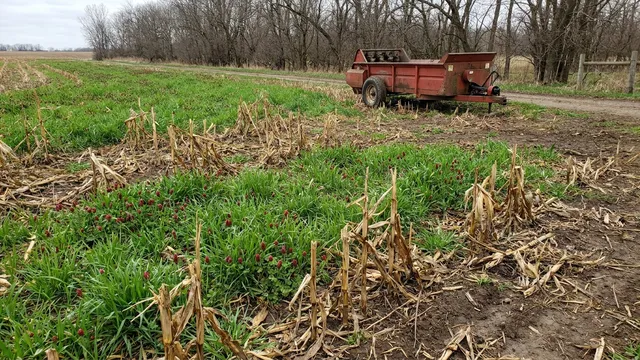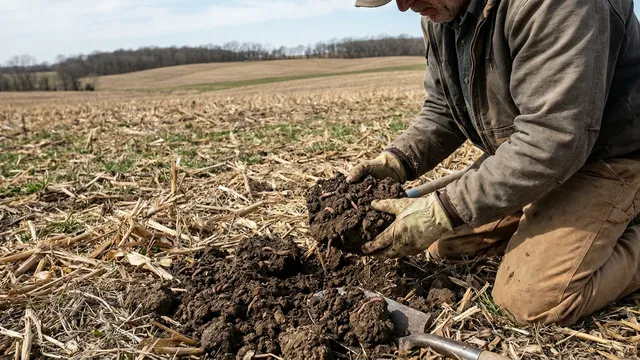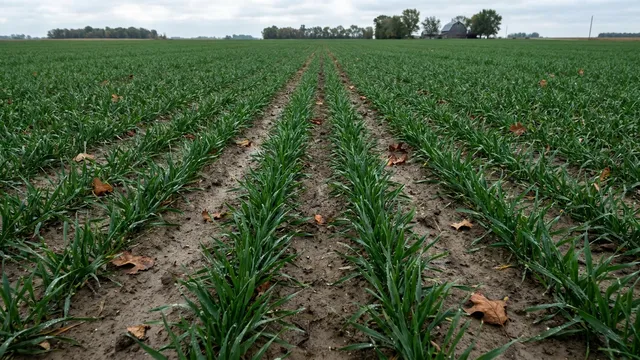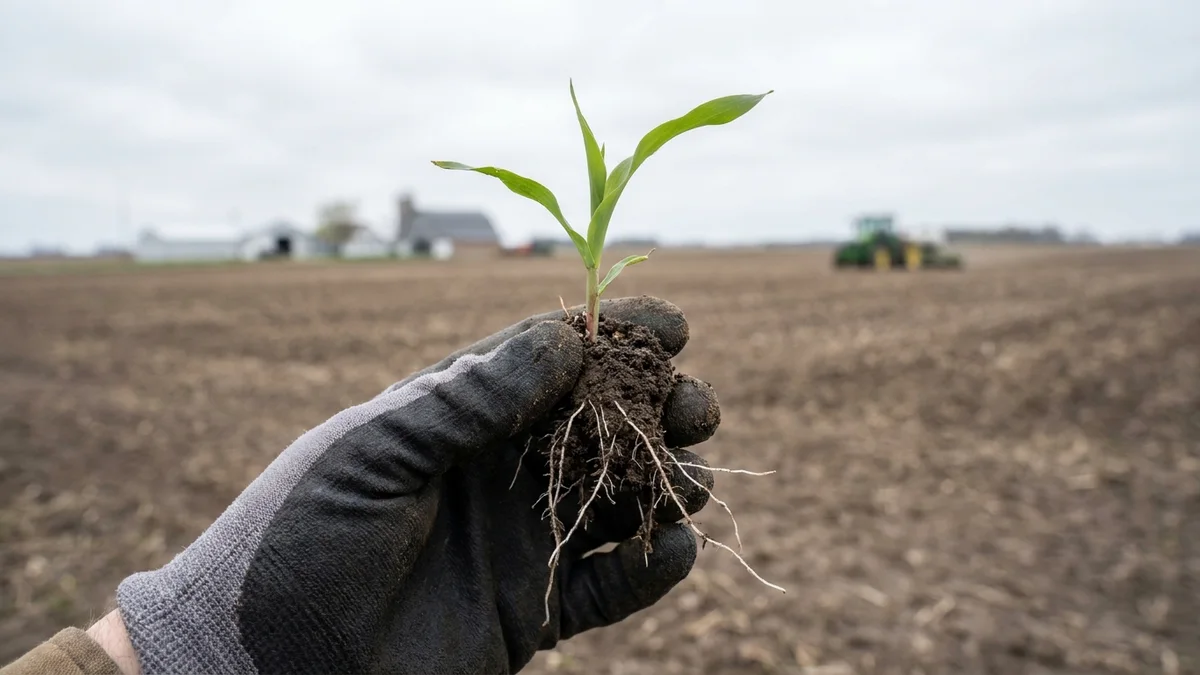
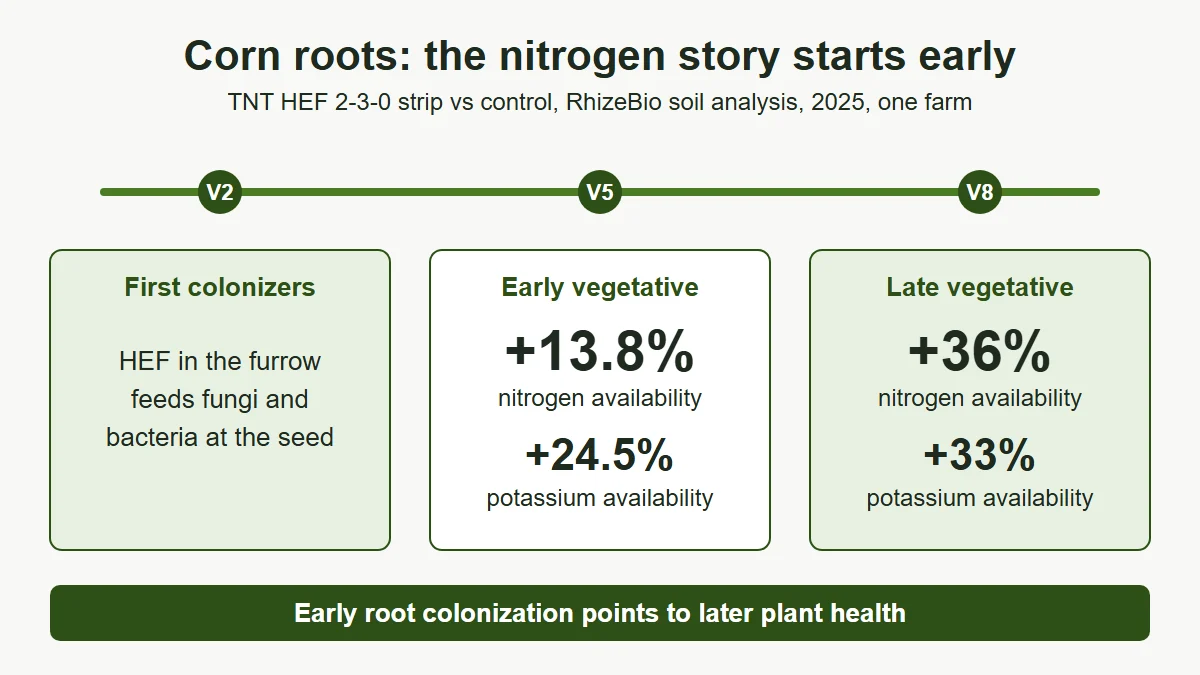
In the first weeks of a corn crop, the microbes that colonize the seedling root decide how much soil nitrogen becomes nitrate the plant can use and how much is lost to the air. In RhizeBio’s 2025 sampling of a TNT HEF 2-3-0 corn strip, nitrogen availability in the root zone ran 13.8% above the control at V5 and 36% above it at V8 (RhizeBio soil analysis, 2025, one farm).
Why do the first two weeks of corn matter so much?
A corn seedling has a few roots and a short list of microbial neighbors. Whatever settles in that small root zone first sets the pattern for the weeks after. In our Talk Time session on the trial results, the lab team said that across many reports, early colonization of the root system is really indicative of future plant health. You can hear it in the TNT 2025 Trial Results webinar.
That idea is why TNT HEF goes in the seed trench. HEF is naturally fermented whole saltwater salmon with over 70% volatile fatty acids, food for the fungi and bacteria that live around the seed. It draws beneficial microbes from the surrounding soil to the trench and promotes early root development. The in-furrow rate is 2-4 qt/acre, and both 2025 corn trials used 2 qt/ac.
What are nitrification and denitrification?
Think of nitrogen in the soil as moving between three places.
- Ammonium is nitrogen held on soil particles and in organic matter.
- Nitrate is the form dissolved in soil water that corn pulls up with its roots. Microbes make it from ammonium in a step called nitrification.
- Nitrogen gas is what escapes to the air when other microbes run denitrification. Once it is gas, the crop does not get it.
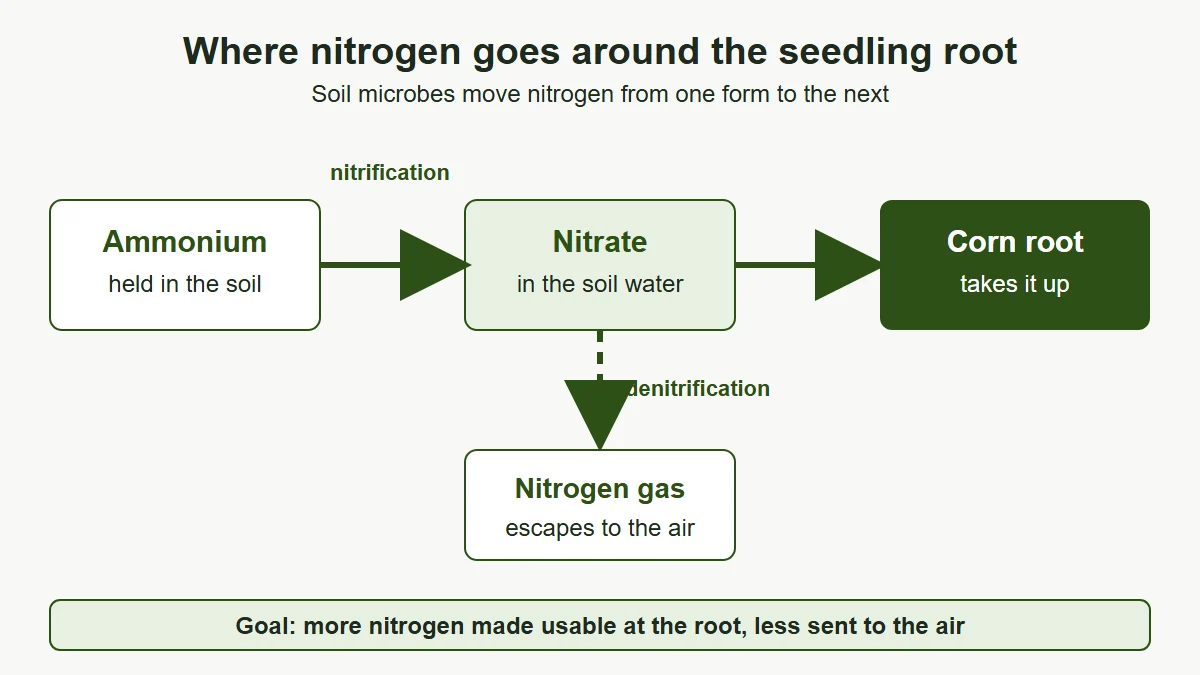
Both steps are run by microbes, so the make-up of the root-zone community has a direct say in how much nitrogen the seedling gets. A root zone that is busy turning ammonium into nitrate, and keeping it there, is one where the nitrogen you already paid for is reaching the crop.
What did RhizeBio measure in the TNT HEF 2-3-0 strip?
RhizeBio is an independent soil microbiome lab. In its 2025 “Roots to Shoots” work on corn, it compared a strip treated with TNT HEF 2-3-0 alone against an untreated control, sampling the root zone through the vegetative stages.
| Stage | What RhizeBio reported | HEF 2-3-0 strip vs control |
|---|---|---|
| V5 | Nitrogen availability | 13.8% higher |
| V5 | Potassium availability | 24.5% higher |
| V8 | Nitrogen availability | 36% higher |
| V8 | Potassium availability | 33.1% higher |
| V8 | Overall soil health score | 51% higher |
RhizeBio soil analysis, 2025, one farm, one season. These are soil-biology observations, and results vary with soil, weather and program.
The pattern is the useful part. The nitrogen lead was already there by V5 and had grown by V8, just as the plant moves into its fastest growth. Potassium followed the same path.
Why would a fish product change the nitrogen picture?
HEF carries 2% nitrogen on the label, so the extra availability is not simply the nitrogen in the jug. It is the biology. HEF is a potent biostimulator for fungi and bacteria, and those are the organisms that cycle nitrogen and mobilize potassium in the root zone. Feed them at the seed, and they have a head start on the young root before the crop needs much from the soil.
A good way to say it: HEF works with the soil you have. The nitrogen and potassium are often already in the field. The microbes are what make them available to the root.
What did this mean for yield and cost?
In the 2025 corn trial on one Ohio farm, both TNT strips used 2 qt/ac of HEF in-furrow against the grower’s normal program of a liquid starter, nitrogen in the 2x2 and a 60 gal/ac side-dress. Tissue tests showed no extra nitrogen was needed, so the side-dress was skipped on the TNT strips.
| 2025 corn trial | Control | TNT strip | Inputs per acre, TNT vs control |
|---|---|---|---|
| Trial 1 (HEF in-furrow) | 223 bu/ac | 238 bu/ac | $58 vs $145 |
| Trial 2 (HEF plus Super Salmon+, no 28% at all) | 245 bu/ac | 232 bu/ac | $73 vs $145 |
Trial 1 out-yielded its control and cost far less to grow. Trial 2 ran on no nitrogen beyond a 3 gal starter and still came out ahead of its control on input cost. One farm, one season, results vary. The full write-up is on the 2025 corn trial page.
What keeps more nitrogen in usable form early on?
The seedling only needs a little nitrogen in the first weeks, but what happens to soil nitrogen then shapes what is left when demand climbs. A few habits help the root-zone biology do its job:
- Feed the biology at the seed. A food source in the furrow gives fungi and bacteria a reason to settle on the young root.
- Keep living roots and residue in the system. Cover crops and stubble feed the same microbes between cash crops.
- Do not overload the soil. TNT’s approach is to keep the soil slightly hungry so the biology has work to do, and to let tissue tests decide whether more nitrogen is needed.
- Measure, then decide. A tissue test at matched stages is what let the 2025 trial grower skip a side-dress with confidence.
How can I check this on my own corn?
- Run a strip trial. Put TNT HEF in the trench on replicated strips with your normal program as the control. Our strip trial guide covers layout and moisture correction.
- Dig roots early. Around V2, pull a few plants from trial and control strips and compare root mass and the soil clinging to the roots.
- Take tissue samples on matched days at V5 and V8 from both strips, and read them next to a soil test. Our post on soil tests and tissue tests explains how.
- Keep everything else the same. Hybrid, planting date, population and herbicide must match so any difference is the treatment.
Where does TNT fit in an early-season program?
For corn, the application chart lists HEF at 2 qt/acre in-furrow on 20-30 inch rows and 4 qt on 8-20 inch rows, with foliar passes at V3-V4 and again at V9 or early silking. TNT HEF 2-3-0 is the choice where added phosphorus helps, such as starters and cool soils, and it is OMRI Listed for US organic (NOP). The team has 20+ years of experience with these products and will help any grower set up a trial. You can request a free sample to start.