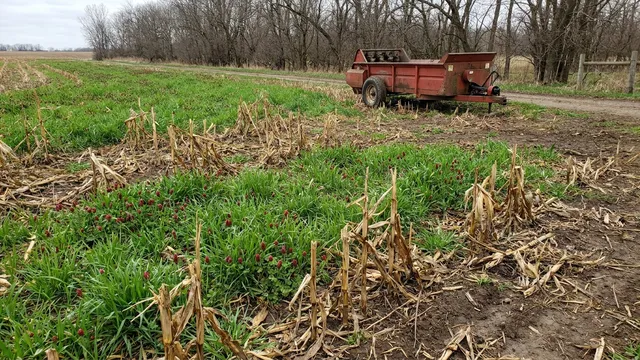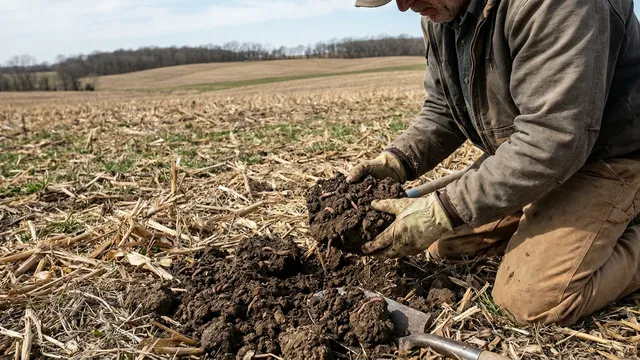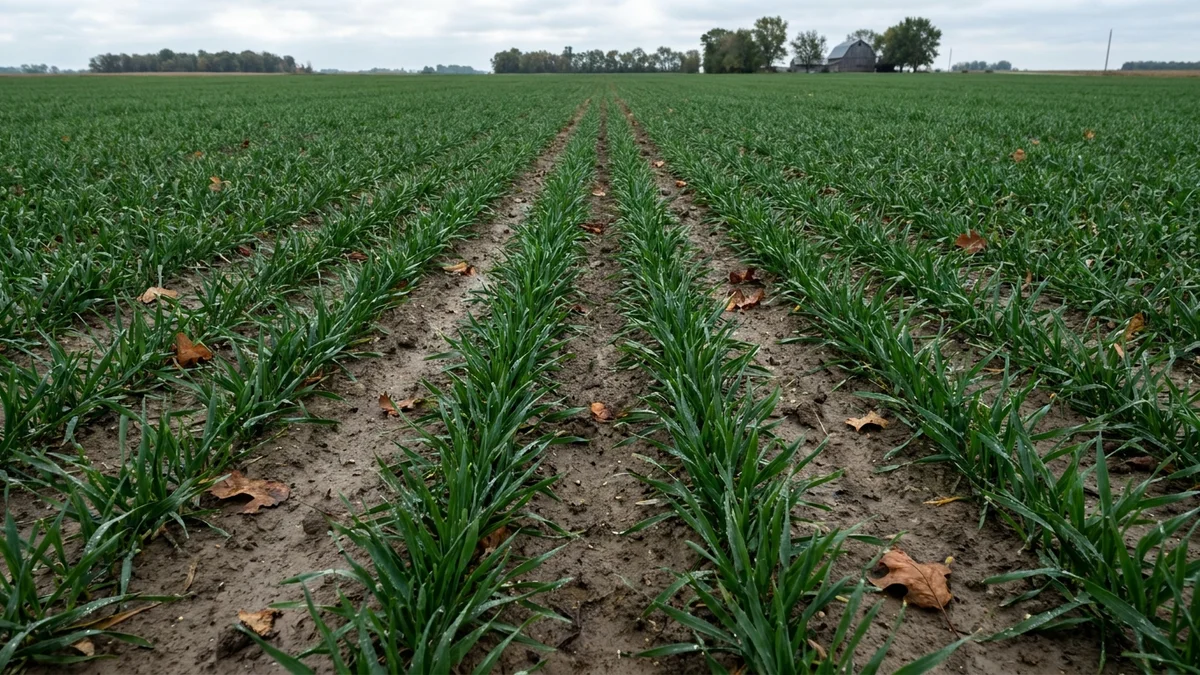
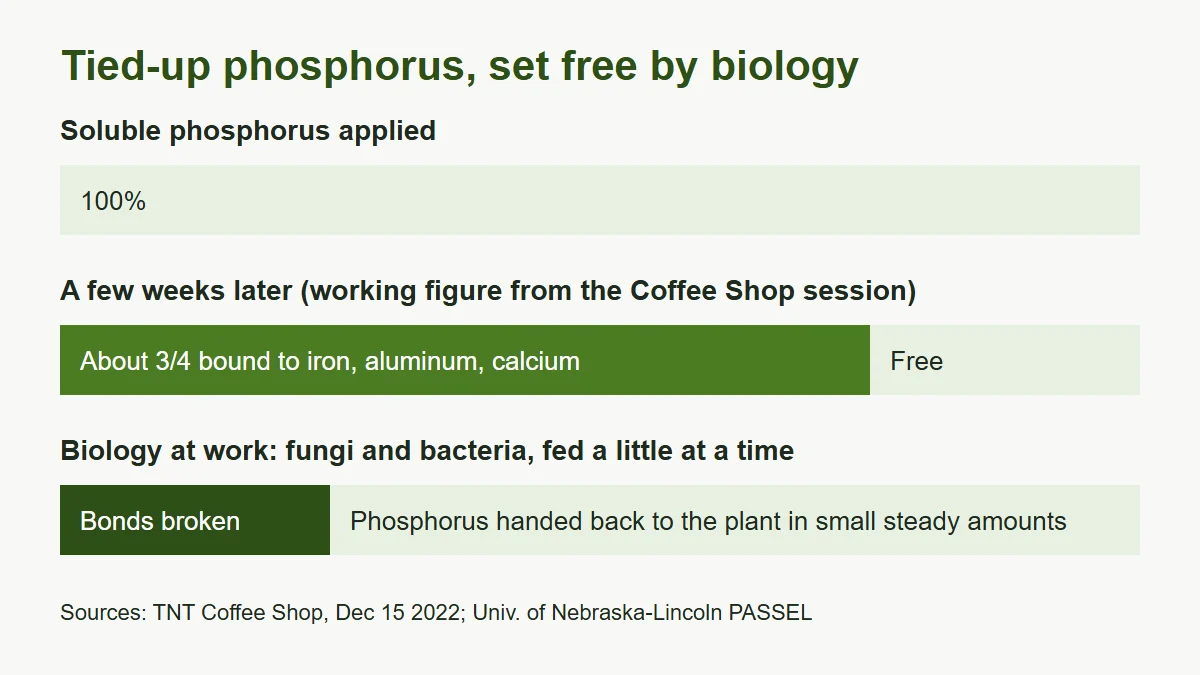
Soil biology frees tied-up phosphorus by working on the bonds that soluble phosphorus forms with iron, aluminum and calcium, and passing the nutrient back to the plant a little at a time. Feed that biology gently and give it a steady low supply, and it keeps doing the job; a rock or bone source can add phosphorus slowly, but it needs a strip trial before it takes MAP's place.
Why does phosphorus get tied up in the first place?
Soluble phosphorus does not stay soluble. The University of Nebraska-Lincoln PASSEL lesson "The Soil Phosphorus Problem" says that when soluble fertilizer phosphorus is placed in the soil, it reverts into slowly soluble or insoluble forms. In acid soil it combines with iron and aluminum. In alkaline soil most of it sits as calcium compounds. The same lesson puts maximum availability at a soil pH between 6.5 and 7.0.
In our Coffee Shop session, Lessons from 2022, Part 1, a soil-biology expert described it this way: soluble phosphorus is extremely reactive, and within a couple of weeks of an application about three quarters of it is tied up with iron, aluminum and calcium. The side effect is that the calcium gets used up as well.
That is why a field can test high and still feed a crop poorly early on. The phosphorus is there. It is not where the root can use it. Freeing it is a job for the living part of the soil.
How does soil biology release it?
The same expert pointed to mycorrhizal fungi. Their hyphae spread through the soil, break the bond between calcium and phosphorus, and keep the two minerals separated inside the fungal network so they do not react again. The plant pays for the service in sugars.
Other microbes help too. Fungi and bacteria that live around the root digest residue and organic matter, and as they do, minerals come back into the soil solution in small amounts. This is why TNT talks about feeding the biology rather than only feeding the crop.
Why does a steady low supply beat a big dose?
Natural systems run on constant low levels. The call compared it to an IV drip for the plant: small amounts, taken up all the time, rather than a big meal. The expert's line was to keep the biology a little hungry, send it out with a lunch bag and not the whole pantry.
There is a practical side to that. Large soluble applications are the ones that get bound fastest. And fungi work when they are needed: on the call we heard that mycorrhizae stay dormant when soluble phosphorus and nitrogen are high, with 150 lb of MAP given as the point where they will not activate. Moderate, steady feeding leaves the fungi with a reason to work.
Where does TNT HEF fit?
HEF is naturally fermented whole saltwater salmon, made with a cold process. TNT describes it as a potent biostimulant for both fungi and bacteria, and it draws beneficial microbes from the surrounding soil to the seed trench, a bit like colostrum for a seedling. Over 70% of its dry matter is volatile fatty acids, which soil microbes can use right away.
TNT HEF 2-3-0 adds 3% available phosphate (P2O5) and is OMRI Listed for US organic (NOP, tna-16447, expires 1 March 2027). TNT HEF 2-0-0 has no phosphorus and is OMRI Listed for Canada (COR) only. The in-furrow rate for either is 2-4 qt/acre, diluted at 1:10 or more.
The phosphorus it brings is modest by design. At 8.5 lb per gallon, a 2 qt rate puts 4.25 lb of product in the row, which works out to roughly an eighth of a pound of P2O5 per acre. It is a starter nudge for roots in cool soil, not a phosphorus budget. The larger job is feeding the fungi and bacteria that work on the phosphorus already in the ground.
Can rock phosphate do MAP's job?
It is worth a trial, not a swap on faith. Here is how the common sources behave:
| Phosphorus source | How it behaves | What to watch |
|---|---|---|
| MAP and other soluble phosphates | Fast supply that starts reacting with iron, aluminum and calcium right away | Heavy rates can keep mycorrhizae dormant |
| Rock phosphate | Slow release; microbes and organic acids work on the rock over time | Availability depends on soil pH and biology |
| Bone ash or bone meal | Natural calcium phosphate that soil microbes recognise and break down | Check certifier rules and your soil test |
| HEF 2-3-0 in the furrow | A small 3% available P2O5 dose beside the seed, plus food for soil biology | A starter, not the whole phosphorus plan |
One grower on the call seeded wheat with a small rate of bone ash through the drill in place of MAP and was pleased with the stand. That is one observation at one stage, so the way to learn what a slower source does on your ground is to put it beside what you use now and compare, all the way through to harvest.
What should you check before you change a phosphorus plan?
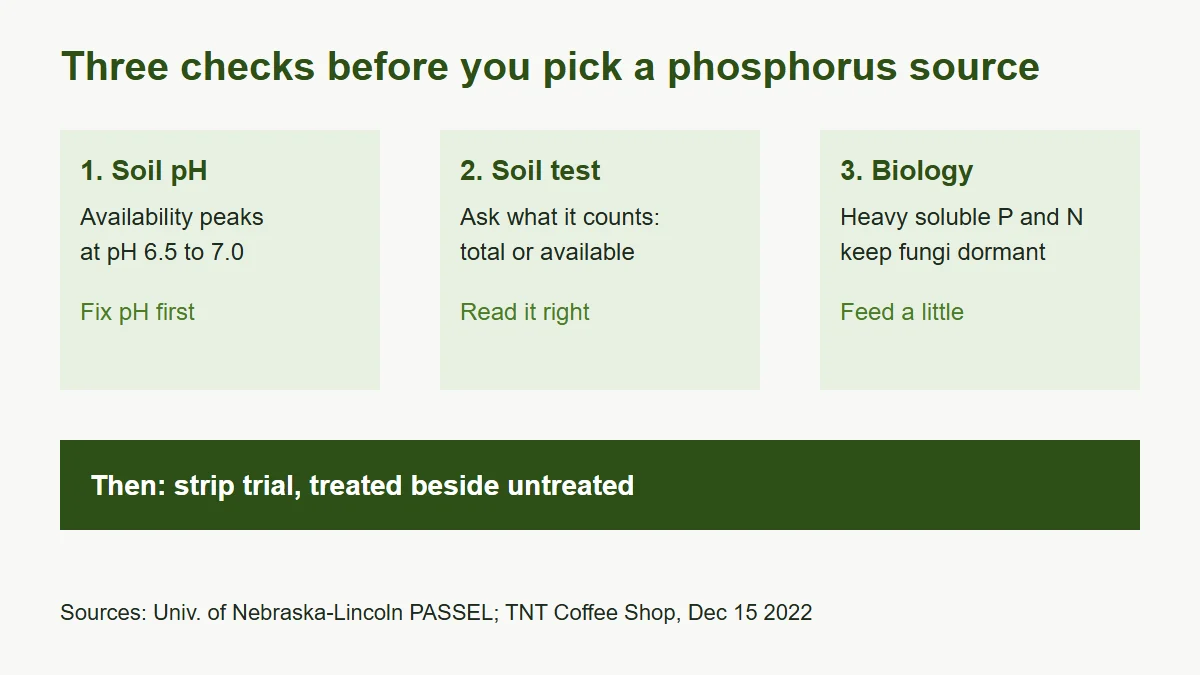
- Soil pH first. Availability peaks between 6.5 and 7.0 (UNL PASSEL), so fix pH before adding more phosphorus.
- Know what the test measures. Ask the lab whether it counts only what a root can reach or the total. A test that reads available forms tells you more about biology at work.
- Feed the biology a little at a time. Keep the program steady rather than one big dose.
- Run a strip. One treated strip and one untreated strip, harvested the same way.
What does this look like over a few seasons?
Biology builds on itself. On the call we heard that the more a grower works with the soil and improves its biological response, the less he finds he needs to chase individual nutrients, and that the useful thing to watch is the progression from one year's soil test to the next. Keeping a sample of the same field each year turns that into a record you can read. Alongside the lab numbers, watch the field itself: faster residue breakdown, a darker and looser soil, quicker drainage after rain and an earthy smell all point the same way.
How do I put this to work next season?
Pull a soil sample and check pH, choose one field for a pair of strips, and look over the in-furrow program on our corn page. A free sample for your strip trial is at /free-sample, or call or text (574) 532-6201.