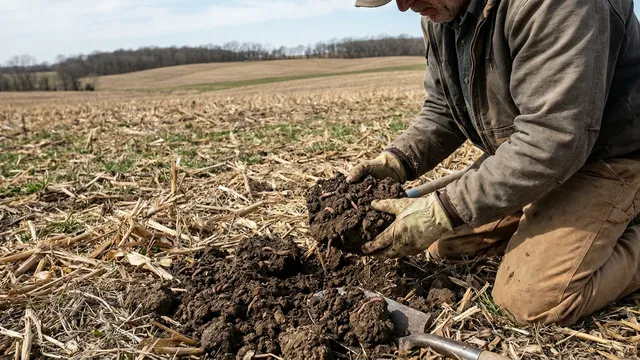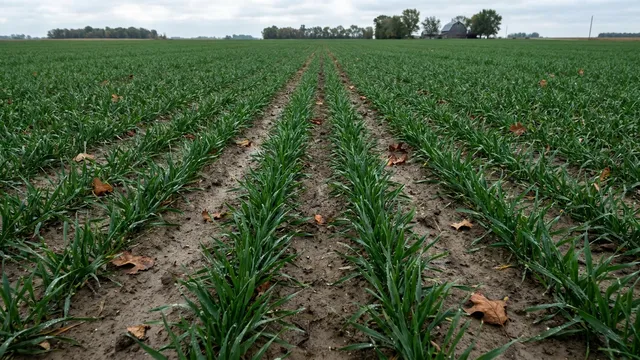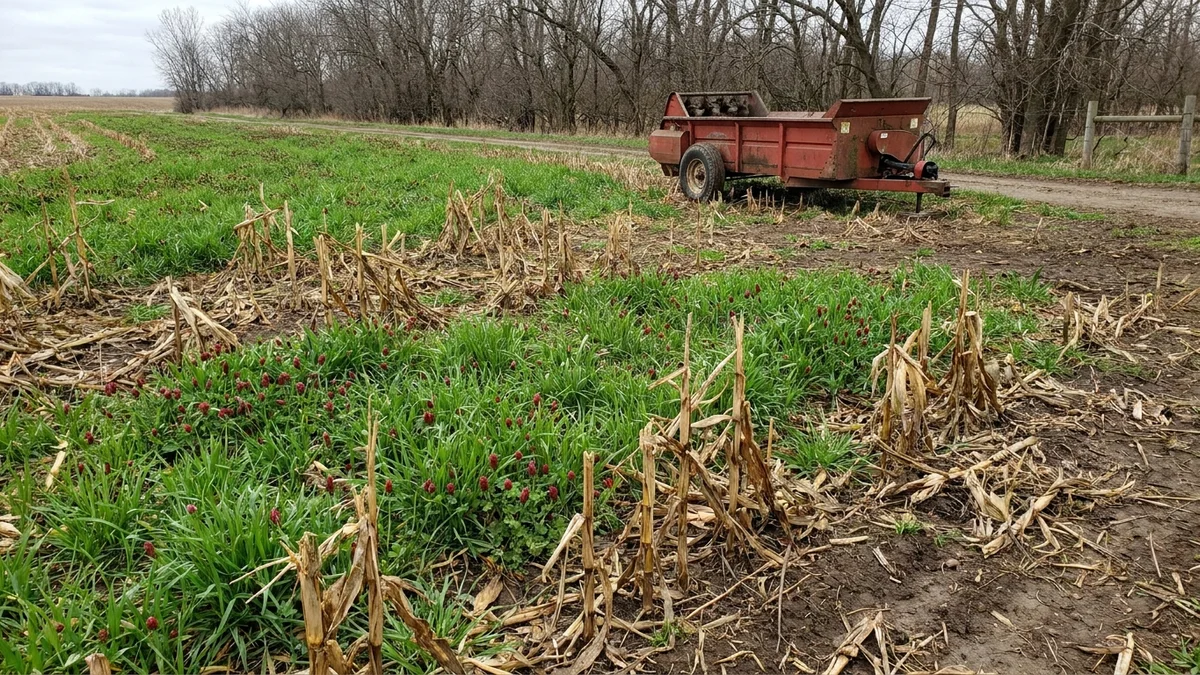
The organic nitrogen sources that carry a row crop are legume cover crops, poultry compost or litter, feather meal and blood meal. Manure and compost build soil and release slowly, meals release by the numbers on the bag, and fish fertilizer is a low-N biostimulant that sits alongside them instead of replacing them.
How much nitrogen is in each organic source?
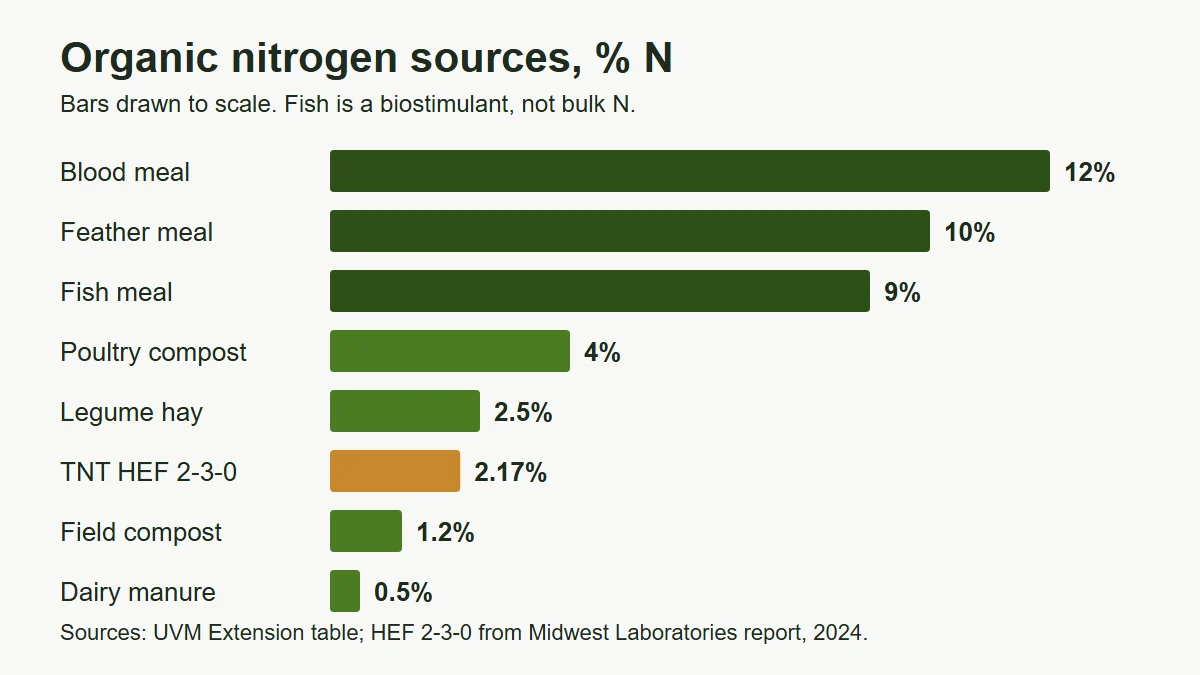
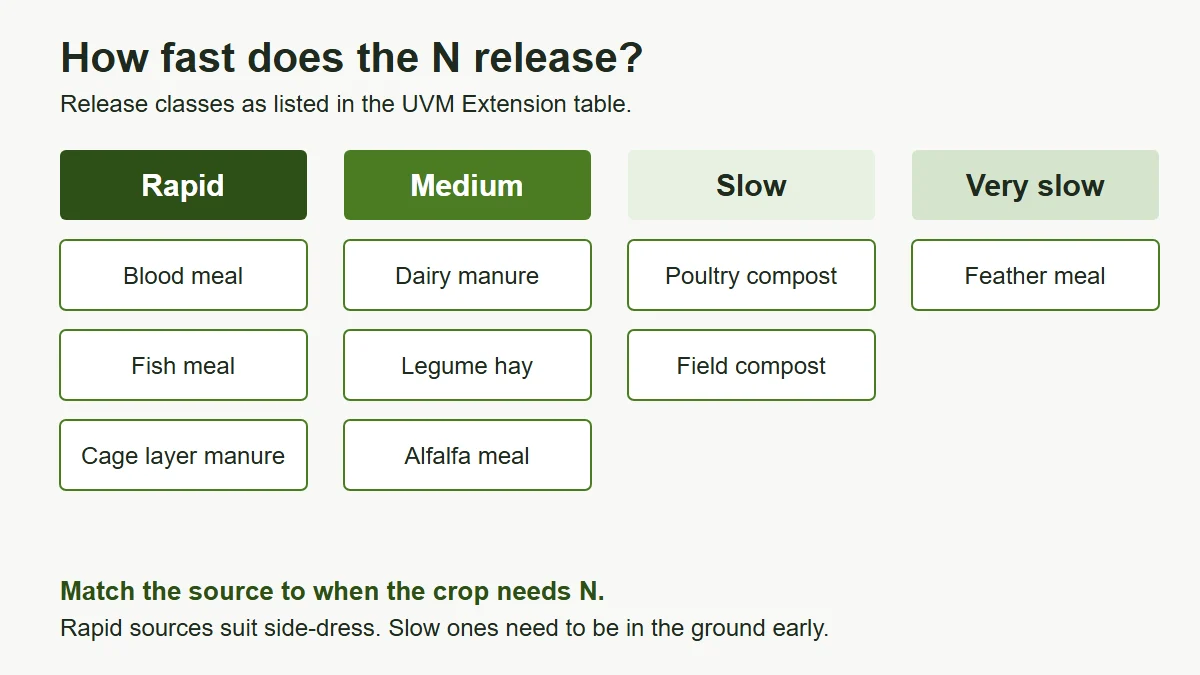
Less than most farmers expect, and the spread is huge. Vermont's UVM Extension publishes a table of N content and release rate for common organic materials. Here are its numbers, with TNT's own lab result for comparison.
| Source | Total N | Release speed |
|---|---|---|
| Blood meal | 12% | Rapid |
| Feather meal | 10% | Very slow |
| Fish meal | 9% | Rapid |
| Poultry manure compost | 4% | Slow |
| Alfalfa meal | 2.7% | Medium |
| Legume hay | 2.5% | Medium |
| Fresh cage layer manure | 1.5% | Rapid |
| Finished field compost | 1.2% | Slow |
| Fresh dairy manure | 0.5% | Medium |
| TNT HEF 2-3-0 (liquid fish, lab test) | 2.17% | Not a bulk N source |
Rows other than the last come from the UVM Extension table ("Sources of Nitrogen for Organic Farms," Vern Grubinger, Vermont Vegetable and Berry Program). The HEF 2-3-0 figure is from Midwest Laboratories report #24-073-4206, as received.
What does that mean per acre?
The percent on the bag sets how much you haul. This is plain arithmetic, not a recommendation. To put down 100 lb of N from a 12% blood meal you spread about 830 lb of product. From 10% feather meal it is about 1,000 lb. From a 4% poultry compost it is 2,500 lb, and only part of that N shows up this year.
That is why cost per pound of available N matters more than cost per ton. A cheap, low-N material costs more to buy, haul and spread per pound of N.
Do legume cover crops really replace purchased nitrogen?
They can cover a large share, with a catch on timing. UVM Extension says green manure crops may contain 100-200 lb of N per acre, and that about half of that N is released as the crop breaks down after incorporation. You pay for it in ground occupied and a termination window, not in a purchase.
A few field notes from the way these systems run:
- The N is released as the residue breaks down, so a warm, moist spring releases it sooner than a cold one.
- Terminate the cover early enough that the residue has started to break down before the seed goes in.
- Non-legume covers like rye hold fall N and tie some up in spring. They are a different tool.
What should I check before I buy a meal or litter?
Read the guaranteed analysis, not the marketing. Ask what the N percent is as received, how much of it is quick and how much is slow, and whether your organic certifier accepts the source. Raw manure and some litters carry waiting periods and source rules under the National Organic Program, and a bag that works in a garden may not be allowed on certified ground. Get the answer in writing before the truck shows up.
Also ask what else comes with the N. Poultry litter brings phosphorus and potassium. On a field already high in P, that can push the soil test the wrong way long before it fills the N bill.
How fast does the nitrogen actually release?
It follows the chemistry. Blood meal and fresh poultry manure carry N in forms microbes convert quickly. Feather meal is protein that breaks down slowly, so UVM Extension rates it very slow. In general, the higher the carbon-to-nitrogen ratio of a material, the less N is readily available to the crop.
Compost is the extreme case. UVM Extension says only about 10% of the total N in finished compost is available in the year of application. Ohio State University Extension, in its fact sheet "Manure and Compost: Nitrogen Availability in Organic Production," estimates first-year available organic N at 33% and says the ammonium portion available in year one ranges from 15 to 75% depending on application timing. Poultry compost in that publication ranges from 1.75% to 4.0% total N.
Practical read: manure and compost feed next year's crop and build soil. A meal or a legume feeds this year's crop.
When should each source go on?
- Before planting, weeks ahead: poultry compost, feather meal, and any slow source that needs time to break down.
- At or just before planting: incorporated legume residue and manure, with attention to any organic-program waiting periods.
- Side-dress while the crop is growing: blood meal or another rapid source, timed to when corn is taking up N fast.
- Every pass: check with a nitrate test and tissue tests, and keep a check strip.
Where does fish fertilizer fit?
Honestly, not as bulk nitrogen. TNT HEF 2-3-0 tested 2.17% total N, and 1 gallon weighs 8.5 lb. At the top in-furrow rate of 4 qt/ac (1 gal) that is about 0.18 lb of N per acre. A corn crop needs far more than that from another source.
What fish does do is feed soil biology. HEF is a cold-process ferment of whole saltwater salmon, and HEF 2-0-0 tested over 70% volatile fatty acids on a dry-matter basis (Dairy One report). The idea is to wake up the biology that releases N from the compost, manure and residue you already put down. Think of it as the starter for the system, not the fuel.
- TNT HEF 2-3-0 is OMRI Listed for US organic (NOP, tna-16447) and carries phosphate for early root growth. In-furrow rate is 2-4 qt/ac.
- TNT Super Salmon+ is OMRI Listed for US organic (NOP, tna-17020) and runs 2-2-0.
For measured results, TNT's only trial data is the 2025 corn trial on one Ohio farm, one season, where tissue tests were used to decide whether the side-dress was needed. Both trials, with both sides, are on the reports page. Results vary with soil, weather and program.
Why keep the crop a little hungry for nitrogen?
Because the soil biology does more work when it has a job to do. In our Coffee Shop session Lessons from 2022, Part 1, the comparison was dinner: if someone shows up at your door with supper every night, you stop cooking. A crop given every pound of N it could want has little reason to feed the microbes that cycle and fix nitrogen. Give the biology a push, cover the real gaps, and let it work around the clock.
The same idea came up in a later TNT grower call. A crop that is kept just a little hungry for nitrogen keeps trading its sugars with the nitrogen-cycling microbes around its roots. Three practical steps follow from that:
- Tissue test before you add more. It tells you whether the crop really needs the next pass, and what else it is short of.
- Look at what drives sugar. The plant feeds its root microbes with sugars from photosynthesis, so magnesium, phosphorus, manganese, iron and boron on the tissue report matter as much as the N number. Molybdenum is food for nitrogen-fixing bacteria.
- Wait for rain after a dry spell. Nitrogen needs water to move into the plant. A low tissue N after weeks without rain often corrects itself a few days after a good rain, so retest then.
Which source fits which farm?
- Livestock or poultry neighbors: compost or litter, applied early, with the slow release priced in.
- Rotation with room for a cover: legume green manure first, a rapid meal only to fill gaps.
- Short on time, tight on ground: meals give a known N percent and a predictable spread rate. Expect the cost to show.
- Any of the above: a small fish pass in-furrow if you want the biology working at planting.
If you want to see how an organic program stacks up against a synthetic one on cost and logic, read organic vs synthetic fertilizer. For what happens to the stalks you leave behind, see what to do with heavy corn stalks after harvest. When you are ready to test fish on your own ground, request a free sample and run a strip against your usual program.