No-Till Fertilizer: What to Apply, Pass by Pass
Fish fertilizer passes for no-till and strip-till corn and soybeans, from the planting pass through harvest, at the rates printed on our labels.
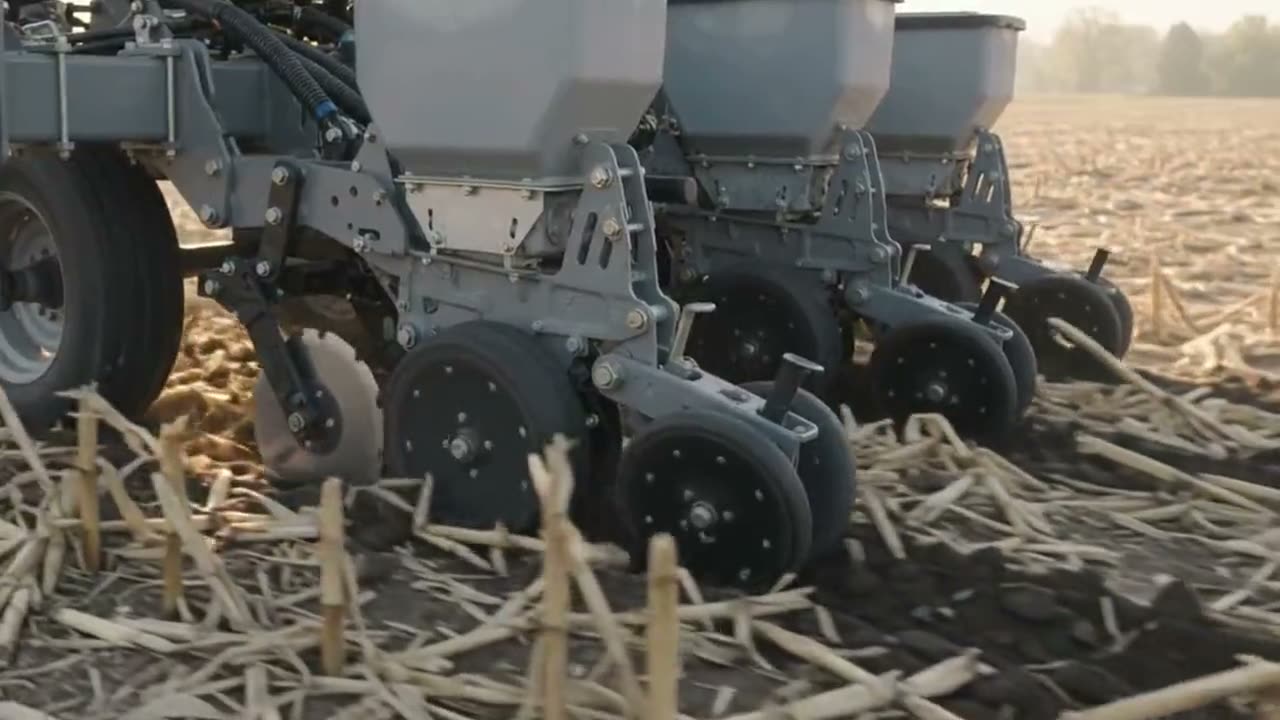
In no-till, fertilizer has to go where young roots can reach it, on passes you already make. Purdue Extension notes no-till soil is often cooler and wetter at planting, and it recommends a starter for no-till and strip-till corn. TNT HEF goes in the furrow at the label rate of 1 to 3 qt/acre, beside your starter program.
Source: Purdue Extension, AY-313;Purdue, "Starter Fertilizer" (Brouder, 1996).
What does no-till change for fertility?
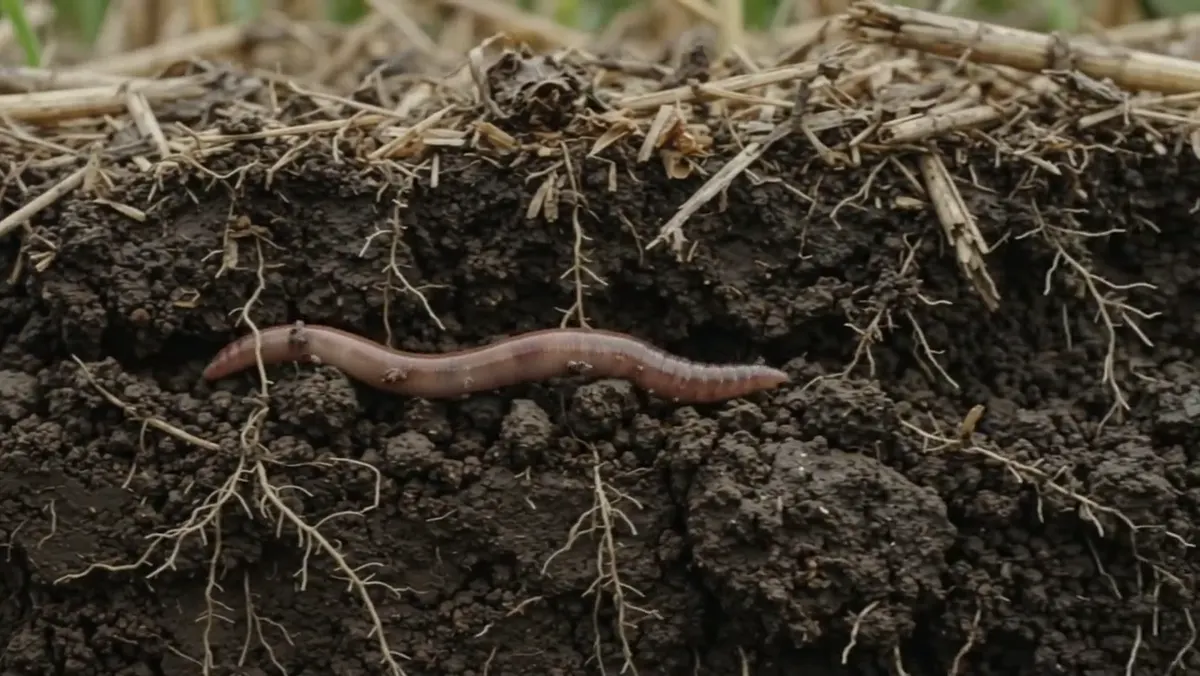
Three things change when you stop tilling. The soil stays cooler and wetter in spring, nitrogen spread on top of residue can get tied up, and phosphorus and potassium build up near the surface. Extension advice for all three starts with placement, though Nebraska and Missouri Extension do call for more nitrogen in some no-till fields.
Purdue Extension says no-till often makes planting conditions cooler and wetter than full-width tillage, and roots are often shallower. Poorly drained soils warm slowly. That is why Purdue recommends a starter for no-till and strip-till corn, placed close to the seed.
Source: Purdue Extension, AY-313.
University of Missouri Extension warns that surface residue in no-till can tie up surface-applied nitrogen, and broadcast UAN on residue did the worst in its work. Purdue and Nebraska give the same advice: put nitrogen below or beside the row, injected or banded.
Source: University of Missouri Extension, G9175;Purdue Extension, AY-313;Nebraska CropWatch, "Tips for no-tilling corn into corn residue".
Phosphorus and potassium collect near the surface in no-till. Purdue sees no reason to change total P and K for no-till, but suggests sampling the upper and lower soil layers separately. Wisconsin Extension found full-width tillage to fix that layering looks economically unnecessary.
Source: Purdue Extension, AY-313;University of Wisconsin-Madison Extension, "How phosphorus and potassium move (or don't)".
You are in good company. Farmers used no-till on 105,208,515 acres in 2022, on 300,954 farms. USDA puts no-till at 36% of corn acres in 2021 and 45% of wheat acres in 2017.
Source: USDA NASS, 2022 Census of Agriculture, Table 47;USDA ERS, Charts of Note.
What to apply in no-till, pass by pass
Run TNT on the passes you already make: an early-season pass, the planting pass, a foliar pass after a tissue test, and later foliar passes, all at label rates.
| Pass | No-till corn | No-till soybeans | Water (minimum) | Certified organic (NOP) option |
|---|---|---|---|---|
| Early-season pass, before planting | TNT HEF broadcast, 2 to 4 qt/acre | Same | At least 10 gal/acre | TNT HEF 2-3-0, 2 to 4 qt/acre |
| Planting, in the furrow | TNT HEF, 1 to 3 qt/acre | TNT HEF, 1 to 3 qt/acre (TNT chart: 1 qt/acre); use your rhizobium inoculant by its own label | 1 part to 10: 2.5 gal for 1 qt, 5 gal for 2 qt, 7.5 gal for 3 qt | TNT HEF 2-3-0, 1 to 3 qt/acre |
| Planting, in the trench (instead of in-furrow HEF) | TNT Activator, 2.5 gal/acre | Same (label row: Broadacre Crops) | At least 1:2 (5 gal); 1:4 or more preferred (10 gal) | TNT Super Salmon+, up to 2 gal/acre, at least 1:3 (6 gal water for 2 gal) |
| Early growth, after a tissue test | TNT HES or TNT HEF foliar, 0.5 to 4 qt/acre, never over 4 qt/acre together; or TNT Super Salmon+ foliar, up to 2 gal/acre | Same | HEF and HES: at least 10 gal/acre. Super Salmon+: at least 1:10, so 2 gal needs 20 gal | TNT HEF 2-3-0 foliar, 0.5 to 4 qt/acre; TNT Super Salmon+, up to 2 gal/acre |
| Later foliar (corn mid-season; soybeans R1 to R3) | Same label caps as above | Same (TNT chart: HEF 2-3-0, 1 qt/acre at R1 to R3) | Same as above | Same as above |
- The label governs every rate. These are the label caps, not a rate for every field, and we give no set number of days between passes.
- Pick one at planting: TNT HEF in the furrow or TNT Activator in the trench. No TNT label covers both in the same furrow.
- No label covers TNT Super Salmon+ with HEF or HES in one foliar pass. Keep them on separate passes, or call us.
- Jar test every mix, and follow the label of every product in the tank.
- The TNT HEF label sets rates by method, not by crop, so no-till wheat uses the same broadcast and foliar rates. See fish fertilizer for wheat.
- Work out your water and product per field with the calculator.
Want to see it on your own ground first? Get a free sample and run a test strip.
The planting pass: TNT HEF in the furrow, or TNT Activator in the trench
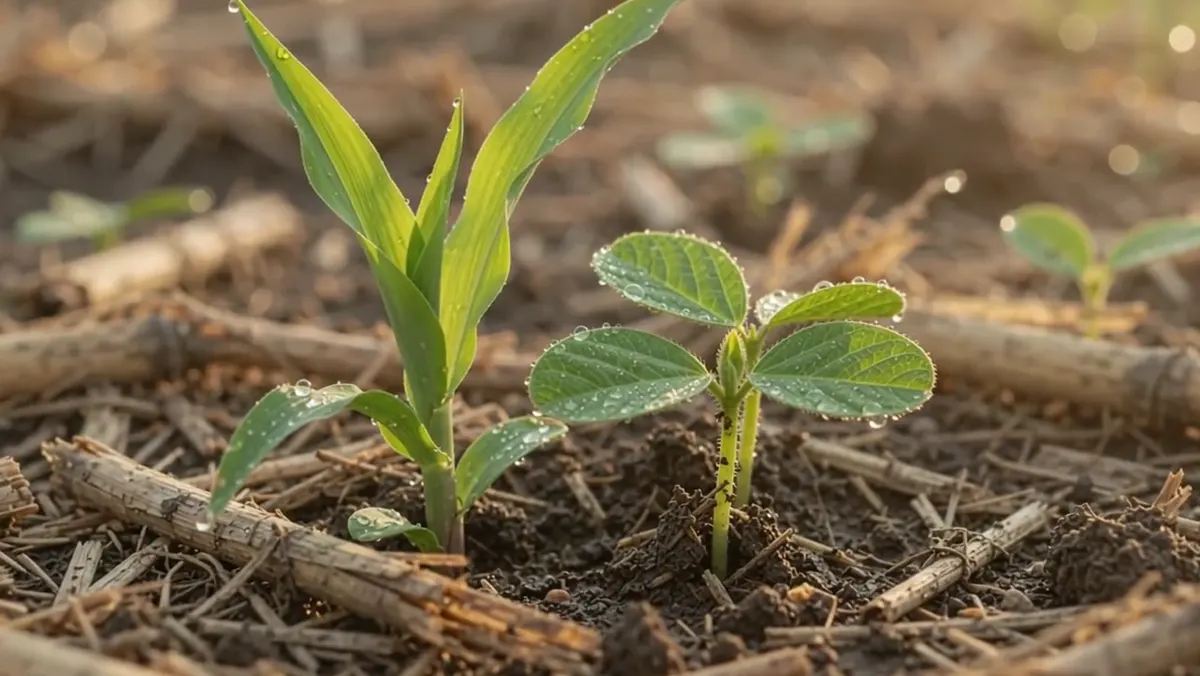
At planting, put TNT HEF in the furrow at 1 to 3 qt/acre, or TNT Activator in the trench at 2.5 gal/acre. Pick one of the two.
Plan your furrow water first. TNT HEF goes in the furrow at least 1 part to 10 parts water, so 1 quart needs at least 2.5 gallons of water per acre, 2 quarts at least 5 gallons and 3 quarts at least 7.5 gallons.
TNT HEF is made from naturally fermented whole saltwater salmon. TNT HEF 2-3-0 guarantees 3% available phosphate, about 0.13 lb per acre at 2 quarts. Use it beside your phosphorus program.
Whatever rides in the furrow, keep the total inside Purdue's salt limits: no more than 5 lb of N plus K2O per acre in-furrow on sandy soil, and 8 lb on silt loam and heavier ground. Our in-furrow starter guide covers calibration.
Source: Purdue, Camberato and Nielsen, "Corn Response to Starter Fertilizer", 2023.
On soybeans, the TNT chart lists 1 qt/acre of HEF in the furrow. Use your rhizobium inoculant by its own label. If the seedbed is dry, call us before you set the rate.
TNT Activator goes in the trench at planting at 2.5 gal/acre, diluted at least 1:2, with 1:4 or more preferred. That is at least 5 gallons of water, 10 preferred. Stir TNT Activator well before it goes in the planter tank: the label notes that cold product is thicker and harder to mix.
Farming a lot of no-till acres? At 2 qt/acre, one 275-gallon tote of TNT HEF 2-3-0 covers 550 acres. See bulk fish fertilizer totes.
Corn growers: see fish fertilizer for corn. Soybean growers: see fish fertilizer for soybeans.
The early-growth foliar pass: tissue test first
When early growth lags, a tissue test shows what the crop is short of. TNT HES and TNT HEF go on as a foliar at 0.5 to 4 qt/acre in at least 10 gallons of water, and the two together never go over 4 qt/acre on one pass.
Penn State Extension advises against foliar fertilizer unless the crop shows a deficiency. A tissue test tells you whether it does, and what to add.
Source: Penn State Extension, "Foliar Fertilizers and Sugars in Soybeans".
TNT Super Salmon+ goes on as a foliar at up to 2 gal/acre, at least 1 part product to 10 parts water, so 2 gallons needs at least 20 gallons of water. Jar test first.
TNT Super Salmon+ is a fortified salmon hydrolysate containing chitin, amino acids, volatile fatty acids and natural fermentation organisms. Its label says it is not likely compatible with calcium inputs, and to flush lines that will stand more than 4 hours.
Certified organic no-till: TNT HEF 2-3-0 and TNT Super Salmon+
Two TNT products are OMRI Listed for US organic production: TNT HEF 2-3-0 (tna-16447) and TNT Super Salmon+ (tna-17020), with certificates valid to March 1, 2027. TNT HEF 2-0-0 is OMRI Listed for Canadian organic production (COR) only. Check with your certifier before use.
TNT HEF 2-3-0 and Super Salmon+ give US organic row-crop growers two OMRI Listed liquids for planting and foliar passes. Check with your certifier.
For certified organic no-till, TNT Super Salmon+ (OMRI Listed for US organic production, NOP, tna-17020) can go in the trench at up to 2 gal/acre, diluted at least 1 part to 3 parts water. Check with your certifier before use.
TNT HES, Activator and Trash Buster are not OMRI Listed. Read more on which fish fertilizers are OMRI listed, or see the certificates on our labels and certifications page.
Residue and TNT Trash Buster
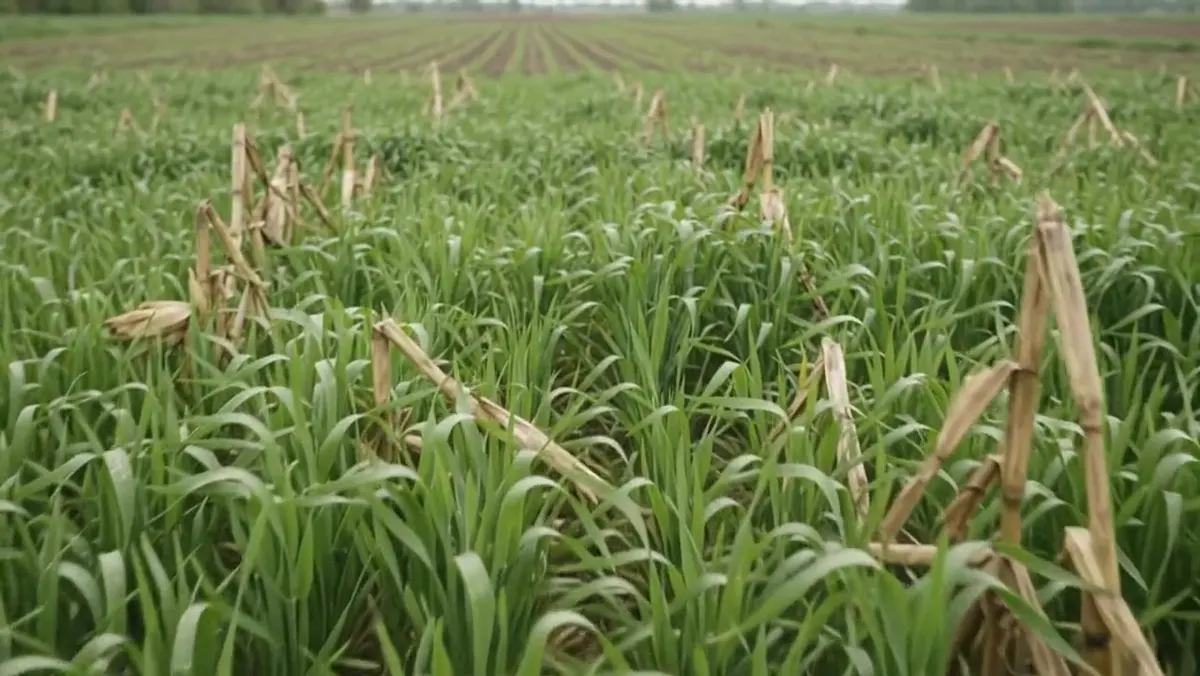
Good residue handling starts at harvest. Purdue Extension says to chop and spread residue evenly, because windrows pull row units up and change seed depth. Iowa State found residue cleaners and heavier down-pressure springs on the planter were the cheaper fix than tilling corn residue before soybeans.
Source: Purdue Extension, AY-313;Iowa State University Extension, "Conservation system management considerations".
The TNT Trash Buster label calls it "especially useful in no-till situations or where heavy crop residues are likely to interfere with future equipment passes."
TNT Trash Buster is made for crop residue that stays in the field. If the ground will be grazed or the residue baled or fed, call the TNT team first at (574) 532-6201.
TNT Trash Buster is not OMRI Listed. Call (574) 532-6201 before you use it. See the TNT Trash Buster page and our corn stalks after harvest guide.
Hay ground and market gardens
Hay and pasture: Kentucky and Penn State extension guides cover no-till seeding of hay: suppress the old sod, calibrate the drill and keep small seed shallow. The TNT HEF label sets rates by method, not by crop: broadcast 2 to 4 qt/acre or foliar 0.5 to 4 qt/acre, each in at least 10 gallons of water. Before TNT Super Salmon+, Activator or Trash Buster goes on ground that will be grazed or cut for feed, call (574) 532-6201 first.
Source: University of Kentucky, "No-till establishment of forage crops";Penn State Extension, "Hay and Pasture Renovation Decisions".
Market gardens and permanent beds: the TNT HEF label broadcast rate of 2 to 4 quarts per acre works out to about 1.5 to 2.9 fluid ounces per 1,000 square feet, in at least 1 quart of water. The foliar rate of 0.5 to 4 quarts per acre works out to about 0.4 to 2.9 fluid ounces per 1,000 square feet.
Growing certified organic vegetables or fruit in the US? TNT HEF 2-3-0 (tna-16447) and TNT Super Salmon+ (tna-17020) are OMRI Listed for US organic production, with certificates valid to March 1, 2027. Check with your certifier before use.
For transplants on conventional beds, the TNT Activator label lists a 1:100 dilution for transplant drench water or fertigation of starter plants. That is about 1.3 fluid ounces per gallon of water. Use what you mix within 8 hours. TNT Activator is not OMRI Listed.
More: fish fertilizer for vegetables and feeding a vegetable garden with fish fertilizer.
Test it on your own ground
The best way to see what TNT HEF does on your no-till ground is a strip beside an untreated one, measured the same way on both. Our on-farm strip trial guide shows how, and the TNT trial portal keeps your notes and photos in one place. Start with a free sample.
No-till fertilizer questions
What fertilizer should I use in no-till?
A no-till program works pass by pass, not as one product: nitrogen and a starter placed close to the seed, a foliar pass when a tissue test calls for one, and a plan for residue. TNT fits the passes you already make: TNT HEF in the furrow at 1 to 3 qt/acre or TNT Activator in the trench at 2.5 gal/acre at planting, then TNT HES, HEF or Super Salmon+ as a foliar inside the label caps.
Do you need starter fertilizer in no-till corn?
Purdue Extension recommends a starter for no-till and strip-till corn, because no-till soil is often cooler and wetter at planting. Purdue's starter trials tested conventional nitrogen starters. TNT HEF goes in the furrow at 1 to 3 qt/acre, at least 1 part to 10 parts water, beside your nitrogen and phosphorus program.
Can fish fertilizer go in-furrow with the seed?
The TNT HEF label lists an in-furrow rate of 1 to 3 qt/acre, at least 1 part HEF to 10 parts water, so 1 quart needs at least 2.5 gallons of water per acre. Keep everything in the furrow inside Purdue's salt limits: 5 lb of N plus K2O per acre on sandy soil, 8 lb on silt loam and heavier. On soybeans or in a dry seedbed, call (574) 532-6201 before you set the rate.
Why does no-till soil stay cold and wet in spring, and does fertilizer help?
Purdue Extension notes no-till planting conditions are often cooler and wetter than full-width tillage, and poorly drained soils warm slowly. No fertilizer warms the soil. Drainage, moving residue off the row and strip-till on poorly drained ground are the tools for that. Purdue recommends a starter close to the seed while roots are small. TNT HEF goes in the furrow at the label rate of 1 to 3 qt/acre, beside your starter program.
Does residue tie up nitrogen in no-till?
It can. University of Missouri Extension warns that surface residue in no-till can tie up surface-applied nitrogen, and broadcast UAN on residue did the worst in its work. Put nitrogen below or beside the row, injected or banded, and set the rate with your agronomist. Our nitrogen deficiency page lists the signs to watch for.
How do I handle corn stalks without tillage?
Start at harvest: Purdue Extension says to chop and spread residue evenly. The TNT Trash Buster label calls it "especially useful in no-till situations or where heavy crop residues are likely to interfere with future equipment passes." TNT Trash Buster is made for crop residue that stays in the field, and it is not OMRI Listed. Call (574) 532-6201 before you use it, and call first if the ground will be grazed or the residue baled or fed.
Can I use fish fertilizer in organic no-till?
Yes, two of them. TNT HEF 2-3-0 (tna-16447) and TNT Super Salmon+ (tna-17020) are OMRI Listed for US organic production (NOP), with certificates valid to March 1, 2027. TNT HEF 2-0-0 is OMRI Listed for Canadian organic production (COR) only. TNT HES, Activator and Trash Buster are not OMRI Listed. Check with your certifier before use.
Can I tank-mix TNT HEF with my no-till burndown pass?
TNT HEF can be broadcast at 2 to 4 qt/acre in at least 10 gallons of water, so it can share an early-season pass when the other product's label allows it. Jar test first, and follow the label of every product in the tank. If either label is silent, call (574) 532-6201 before you mix.
Does this work for strip-till or a no-till market garden?
The TNT labels set rates by application method, so strip-till uses the same in-furrow, trench and foliar rates as no-till. For beds, the TNT HEF label broadcast rate of 2 to 4 quarts per acre works out to about 1.5 to 2.9 fluid ounces per 1,000 square feet, in at least 1 quart of water. On certified organic beds, use TNT HEF 2-3-0 or TNT Super Salmon+, and check with your certifier.
How can I test a no-till program before buying a tote?
Ask for a free sample and run a strip beside an untreated one, measured the same way on both. Our strip trial guide and the TNT trial portal walk you through it. When you are ready, get a quote: at 2 qt/acre, one 275-gallon tote of TNT HEF 2-3-0 covers 550 acres.
Sources
- Purdue Extension, AY-313, "Tillage, conservation and residue management"
- Purdue, Brouder, "Starter Fertilizer" (1996)
- Purdue, Camberato and Nielsen, "Corn Response to Starter Fertilizer" (2023)
- University of Missouri Extension, G9175
- Nebraska CropWatch, "Tips for no-tilling corn into corn residue"
- University of Wisconsin-Madison Extension, P and K stratification
- Iowa State University Extension, conservation system management (2012)
- Penn State Extension, foliar fertilizers and sugars in soybeans
- Penn State Extension, hay and pasture renovation decisions
- University of Kentucky, no-till forage establishment fact sheet
- USDA NASS, 2022 Census of Agriculture, US Table 47
- USDA ERS, Charts of Note (corn and wheat no-till share)

Written by
TNT Farming Solutions
Fermented fish fertilizer maker, Versailles, Indiana, with 20+ years of experience
TNT makes and sells its own fermented salmon fertilizers and biostimulants to row-crop, hay and specialty growers in all 50 states, ran strip trials on one Ohio corn farm in 2025 with a third-party soil lab it paid, and publishes its labels, lab analyses and OMRI certificates.
Product facts checked against the current labels, Midwest Laboratories analyses and OMRI listings. Last reviewed 2026-11-26.
Try TNT on your no-till ground
Run a test strip on your own no-till ground.
Packaged or in bulk totes, shipped from Versailles, Indiana.
Talk to the TNT team, Monday to Friday, 8 AM to 5 PM Eastern.