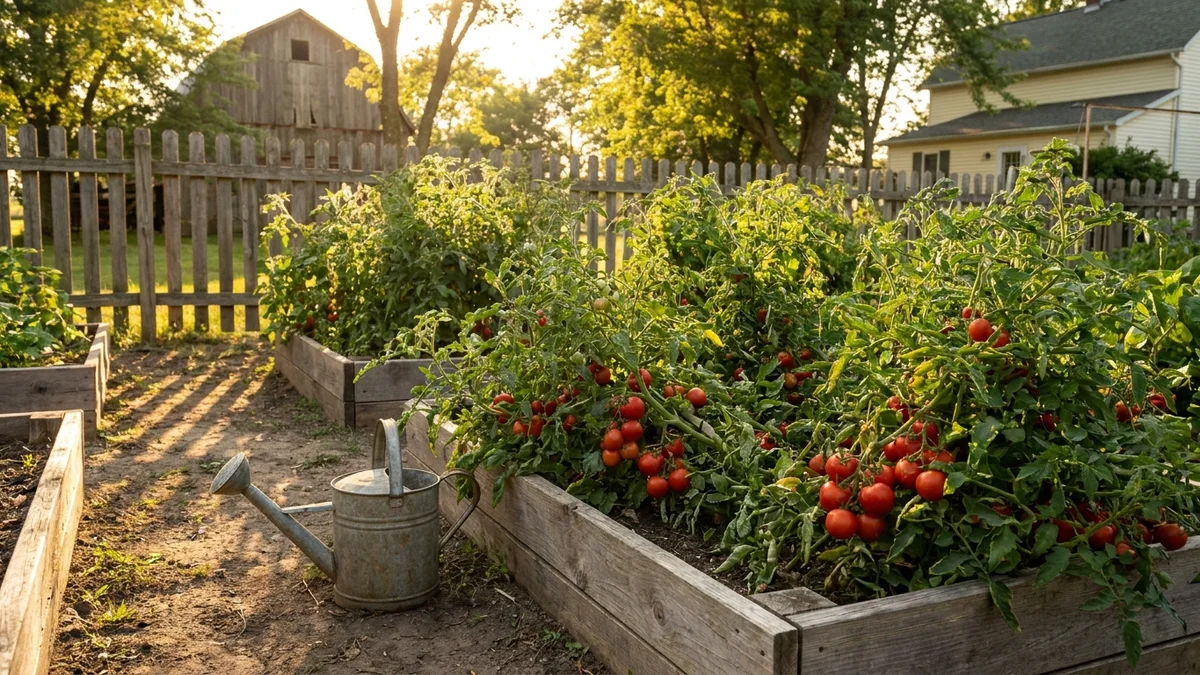
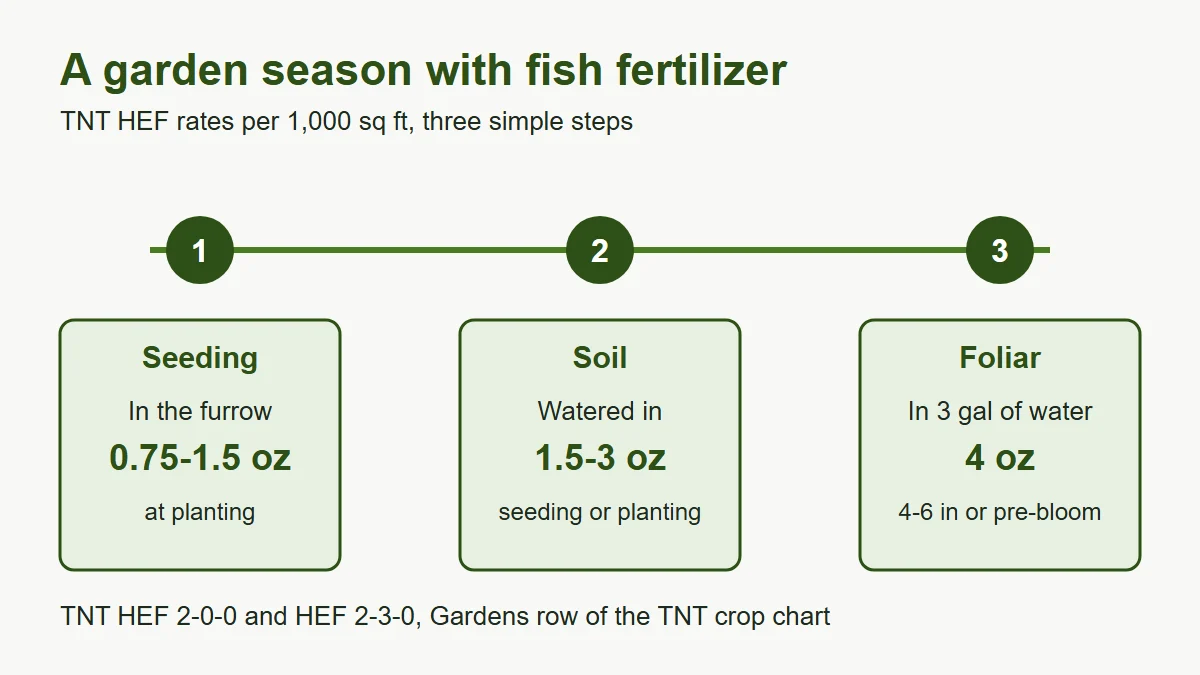
Feed a vegetable garden with TNT HEF at 1.5-3 oz per 1,000 sq ft to the soil, then add a 4 oz foliar spray in about 3 gal of water on 4-6 inch growth or before bloom. That is the Gardens row of our crop chart, and one 1 gal jug covers a season for most yards.
Why does a home garden need a lighter hand?
On our July 2026 call about hay, photosynthesis and home gardens (13:08 in the recording), the same point came up more than once: at home you spray by hand, you walk slowly, and you tend to put on more than a boom sprayer does. So measure, go light, and repeat on a steady schedule rather than pouring on a heavy dose once.
Fish fertilizer suits that approach. Because HEF is cold-processed, naturally fermented whole saltwater salmon, it feeds soil biology as well as the plant. Small, regular additions give microbes a steady meal, and that is the idea behind the garden rates below.
What are the garden rates?
| Step | When | Rate per 1,000 sq ft | Water |
|---|---|---|---|
| In the furrow | When seeding | 0.75-1.5 oz | Water in |
| Soil, broadcast | When seeding or planting | 1.5-3 oz | Water in |
| Foliar | 4-6 inch growth, or before bloom | 4 oz | About 3 gal |
A 20 by 50 ft garden is 1,000 sq ft, so a bed that size takes 1.5-3 oz to the soil and 4 oz in the sprayer. Measure it in a kitchen measuring cup that you keep for the garden. One fluid ounce is about two tablespoons, so 3 oz is about six.
How do I feed the soil before and at planting?
- Measure your bed. Multiply length by width in feet and divide by 1,000.
- Mix the dose in a watering can. Use plenty of water so it spreads evenly across the bed.
- Apply at seeding or planting. Run rows get the in-furrow rate, 0.75-1.5 oz per 1,000 sq ft. Open beds get the soil rate, 1.5-3 oz.
- Water it in. That carries the fish into the root zone and the mild marine odor is gone within hours.
For transplants such as tomatoes, peppers and started vegetables, TNT Activator 1-1-1 at 1:100 is the transplant drench on our label notes. Keep it on the soil, since Activator stains foliage.
How do I foliar feed tomatoes and other vegetables?
The foliar pass puts the product on the leaf. The chart timing is 4-6 inch growth or before bloom, using 4 oz per 1,000 sq ft in about 3 gal of water. For a tomato patch, that means the first pass goes on young plants, and the second before the first flowers open. After that, keep the product away from open bloom and fruit set.
- Spray in the cool part of the day, morning or evening, when the leaf holds the mist longest.
- Cover both leaf surfaces. A fine, even spray beats a heavy dose.
- Use clean water and a clean sprayer. A 50 mesh screen or coarser keeps a fish product flowing.
- Jar test any tank mix. If you add another garden product, test a small jar first.
Steady watering is good practice for any garden, and it pairs well with a fish program: moist soil keeps the biology active and carries the soil feed down to the roots.
Which TNT product fits a garden?
The Gardens row of the TNT crop chart is written for HEF 2-0-0 and HEF 2-3-0. Both work at the rates above. TNT HEF 2-3-0 adds phosphorus, and it is the one that carries OMRI Listed status for US organic (NOP). TNT HEF 2-0-0 is OMRI Listed for Canadian organic (COR) only. See the vegetables guide for field-scale vegetable rates.
| Product | Analysis | Garden use |
|---|---|---|
| TNT HEF 2-0-0 | 2-0-0 | Gardens row rates above |
| TNT HEF 2-3-0 | 2-3-0 | Gardens row rates above, with phosphorus |
| TNT Activator | 1-1-1 | 1:100 transplant drench, soil only |
How often should I repeat it?
The chart gives you three touch points: seeding or planting, 4-6 inch growth, and before bloom. For a garden that is a total of two or three applications across the season, not a weekly routine. Keep a small notebook, write down the date, the bed and the ounces, and compare beds side by side. If you want proof for your own soil, treat half of a row and leave the other half alone. That is the same strip trial we run on the farm, and a free sample is enough for it.
How much will I need?
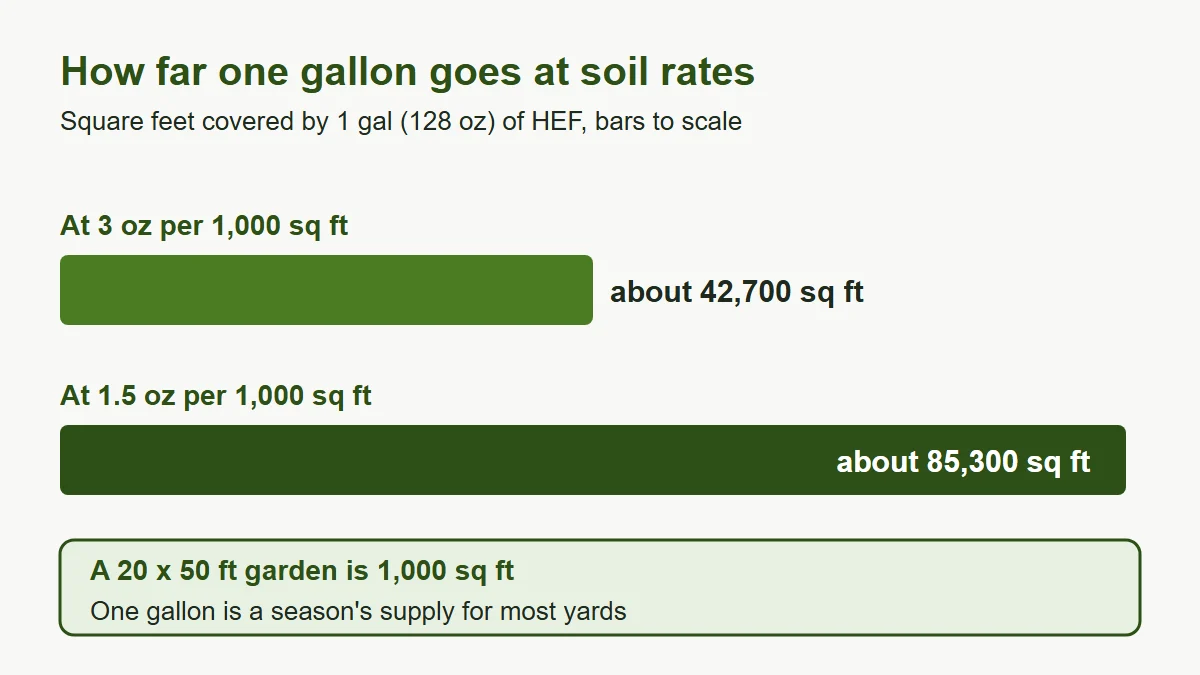
The smallest TNT package is a 1 gal jug, which is 128 oz. At 3 oz per 1,000 sq ft the soil pass alone stretches that to about 42,700 sq ft, and at 1.5 oz it reaches about 85,300 sq ft. Even with the foliar passes added, one gallon is a season for most yards. There is no minimum for pickup in Versailles, Indiana, and for shipped orders we suggest at least 10 gal so freight makes sense.
What does a season look like, bed by bed?
Here is a simple plan for a 1,000 sq ft vegetable garden that mixes tomatoes, peppers, beans and squash.
- Planting day. Mix 2 oz of HEF in a watering can with plenty of water and soak the bed. That sits in the middle of the 1.5-3 oz soil range. Drench transplants with Activator at 1:100 on the soil.
- Young plants, 4-6 inches. Mix 4 oz of HEF into about 3 gal of water and spray the leaves in the morning.
- Just before bloom. Repeat the 4 oz foliar pass so the plants carry that feed into flowering.
- Through fruit set. Keep watering steadily, and skip the foliar spray while flowers are open.
Because the product is a fermented whole salmon, it carries fats, amino acids and a wide range of nutrients from the fish, not only the nitrogen and phosphorus on the label. Write down the date, the bed and the ounces for each pass, so next spring you can repeat what worked best in your beds.
Why feed a garden the way a farm does?
A garden is a small farm, and the same things matter: feeding soil biology, giving roots a good start, and keeping the plant supplied through bloom and fruit. TNT brings 20+ years of experience with fish fertilizer to the Gardens row, so a backyard bed gets the same thinking as a field. If you want a second opinion on rates for your beds, call (574) 532-6201 or request a free sample and try one raised bed against the rest.