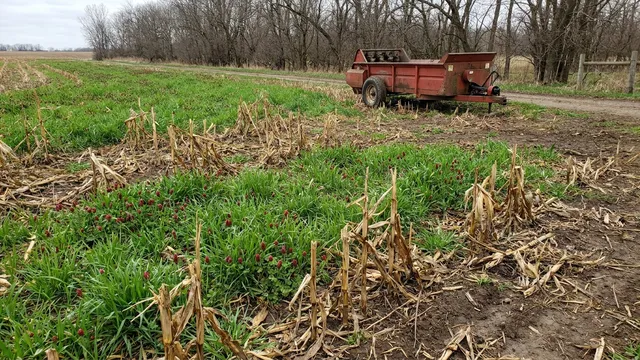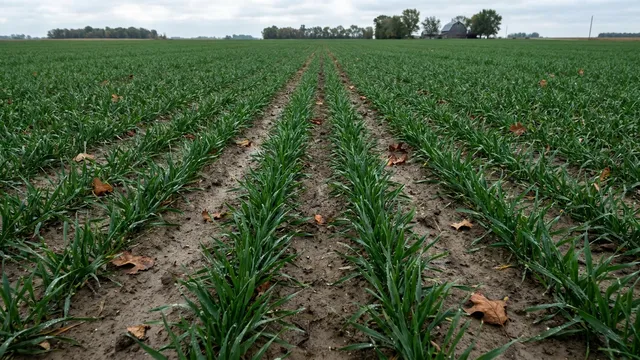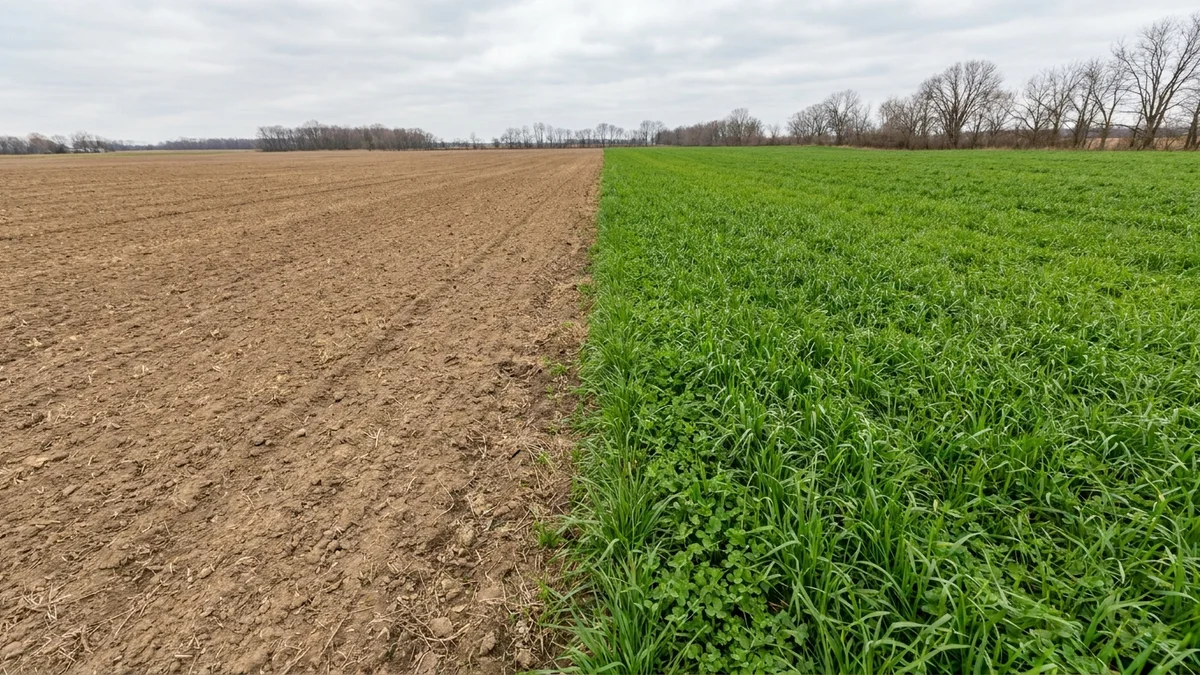
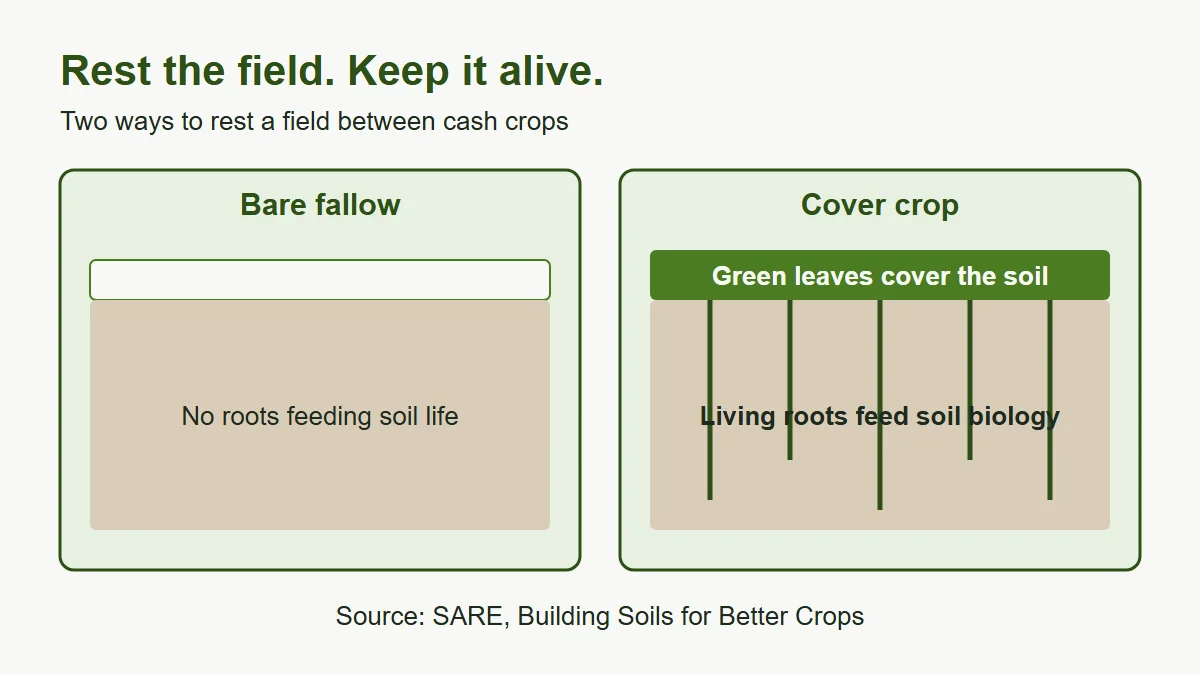
For most fields, the better way to rest ground is with a living cover crop rather than bare fallow. Roots and green leaves keep soil biology fed and the surface protected while the cash crop is off, and that is the whole reason to rest the field in the first place.
Giving a field a break is a question growers bring to us often. The simple version is that land worked every year can use a pause, and a pause with a plan does more than a pause with weeds.
What is the difference between fallow and a cover crop?
Fallow means no cash crop is harvested from the field for a season. A cover crop is something planted for the soil’s sake, not for sale. You can rest a field either way, and you can even do both: plant a cover, let it grow, and skip the harvest.
The difference is what is going on underground. A bare field has no roots feeding the soil life. A covered field does. That is why TNT’s soil program lists keeping soil biology active year-round as the first reason cover crops matter.
Why does a living cover help a resting field?
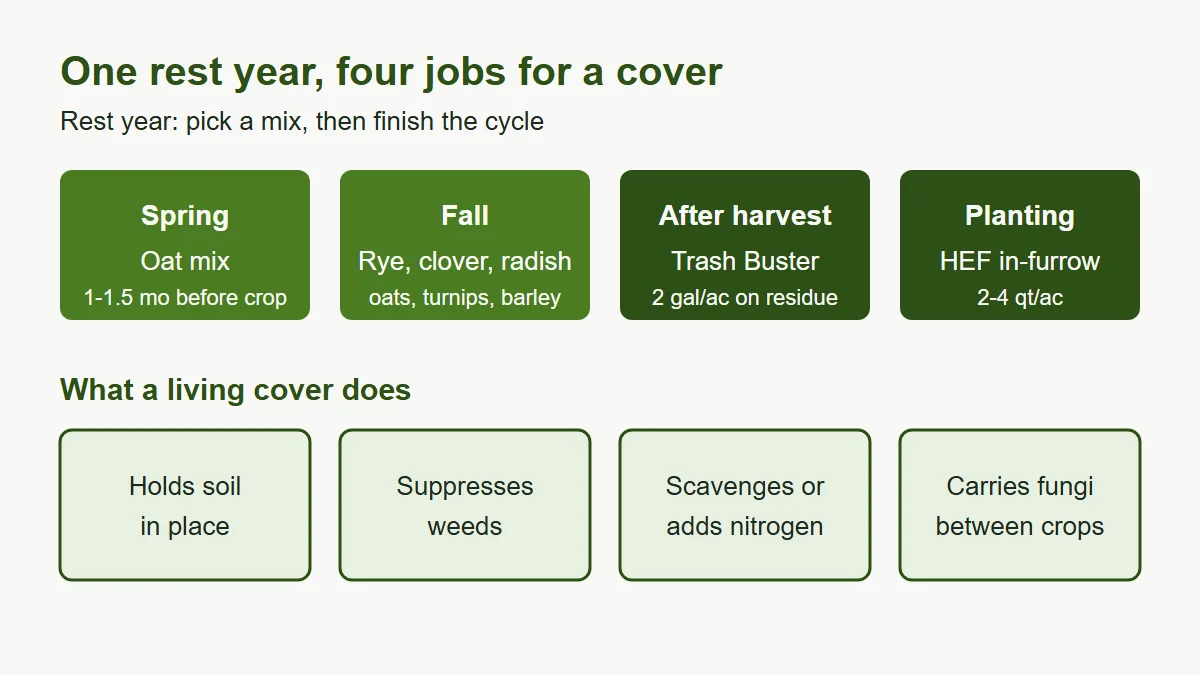
Because it does several jobs at once. SARE’s Building Soils for Better Crops chapter on cover crops describes these:
- Surface protection. Green leaves intercept rainfall and living roots hold on to the soil.
- Organic matter. The chapter says the longer the cover crop grows and the less tillage is used, the greater the increase in soil organic matter.
- Weed suppression. Decomposing cereal rye residue has an allelopathic effect that can suppress germination of small broadleaf weed seeds, and mixed stands usually suppress weeds better than a single species.
- Nitrogen. Legumes that make a substantial amount of growth may supply over 100 pounds of nitrogen per acre to the next crop if allowed to grow to flowering or longer, and grasses with their fibrous roots scavenge nutrients, especially nitrogen, left over from the previous crop.
- Soil life. Mycorrhizal fungi associate with almost all cover crops except brassicas, which helps maintain or improve inoculation of the next crop.
TNT’s own program notes add that cover crops break compaction naturally, suppress weeds through mulch and improve drainage.
Which cover crops fit which season?
TNT’s program splits it by season. In spring, an oat mix goes in about one to one and a half months before the cash crop. In fall, the list is rye, oats, clover, tillage radish, turnips and winter barley. Use the table to match a mix to the job you want done.
| Season | Option | What it is used for |
|---|---|---|
| Spring | Oat mix | Quick roots and cover ahead of the cash crop (1 to 1.5 months before planting) |
| Fall | Cereal rye, oats, winter barley | Surface cover and scavenging leftover nitrogen (SARE) |
| Fall | Clover | Legume nitrogen (SARE: a well-grown legume taken to flowering may supply over 100 lb N/ac) |
| Fall | Tillage radish, turnips | Deep roots; radish penetrates compaction layers 12+ inches (TNT program) |
What does tillage radish add?
It is a favorite for ground that has been packed down. In TNT’s cover crop notes, tillage radish penetrates compaction layers 12 or more inches deep. It acts as a nitrogen mop, capturing fall nitrogen and releasing it in spring. It winterkills, which leaves open channels for water and roots to follow. The notes describe one season transforming swamp-like clay into workable ground, so it is worth a strip on your heaviest soil.
For seeding rates and a low-cost way to run it, see our post on low-cost cover crops and tillage radish.
What happens to the residue afterward?
A cover crop plus last year’s stalks is a lot of material to break down. TNT Trash Buster is a crop residue breakdown activator built for no-till and reduced-tillage fields. It is rich in potassium, iron, boron, molybdenum and selenium. TNT lists it at 2 gal/ac after harvest, sprayed onto standing residue, to speed breakdown and nutrient cycling. See the TNT Trash Buster page for the label. It is not OMRI Listed.
Where does fish fertilizer fit?
It fits at the front of the next cash crop. TNT HEF is naturally fermented whole saltwater salmon, made by a cold process, and TNT’s program uses it in-furrow at 2 to 4 qt/ac for crops like corn. That is a natural way to hand the biology you have been building a good start. The TNT HEF 2-3-0 page has the label, and the corn crop page shows the full program.
For certified organic fields, check the listing first. TNT HEF 2-3-0 (tna-16447) and TNT Super Salmon+ (tna-17020) are OMRI Listed for US organic (NOP). HEF 2-0-0 is OMRI Listed for Canada (COR) only. All listings are dated to expire March 1, 2027.
How fast does a rested, covered field change?
TNT’s soil recovery timeline gives a rough pattern:
- Year 1: better emergence and visible plant health.
- Year 2: soil structure improving and residue breaking down faster.
- Year 3 and on: bigger differences in drought resistance.
Soil type, weather and what you grew all shape the pace, which is why the best number is the one you measure on your own ground.
How do I test it on my own ground?
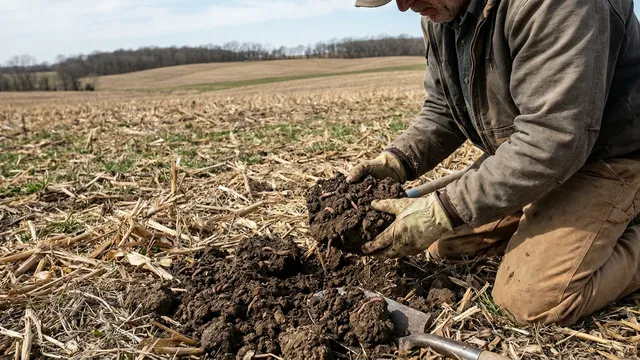
Split a field. Rest one strip with a cover crop and keep the other the way you normally do it, then farm both the same way the next season. Harvest both the same direction and correct for moisture, and repeat it a second season to build confidence. Our own corn trial is posted with both trials and controls on the reports page, caveats included. If you want product for your strip, ask for a free sample, or call or text (574) 532-6201.
Is there a case for leaving the field bare?
Some growers like a short clean break before a late planting, and that is a fair call on a wet spring. If you do, keep it short and get something growing again as soon as the field allows. The longer the ground sits covered by living roots, the longer the soil biology has food to work with, which is the whole point of the rest year.
The short version
- Rest a field with a living cover on it, not bare ground.
- Oat mix in spring; rye, oats, clover, tillage radish, turnips or winter barley in fall.
- Trash Buster at 2 gal/ac on standing residue after harvest.
- HEF in-furrow at planting of the next crop, 2 to 4 qt/ac.
- Measure it with a strip before you scale it.
Sources named above: SARE, “Cover Crops,” in Building Soils for Better Crops (sare.org). TNT facts are from TNT Farming Solutions program notes. The TNT team has 20+ years of experience.