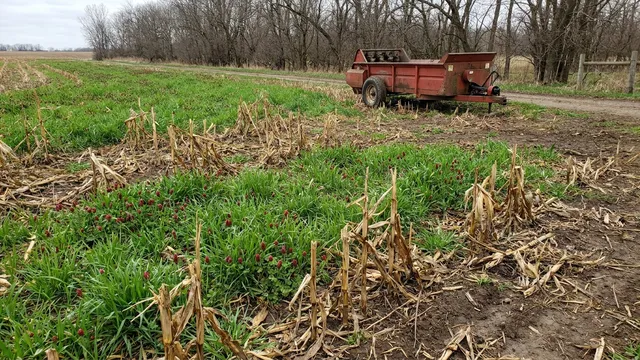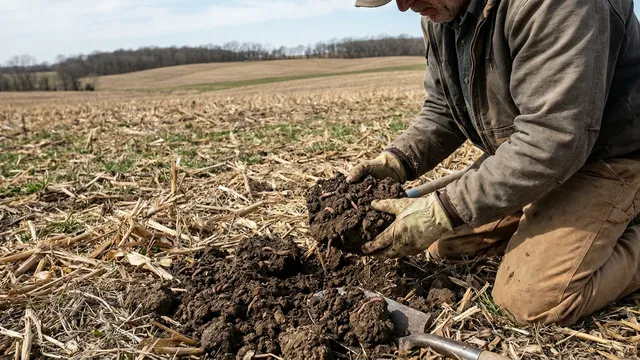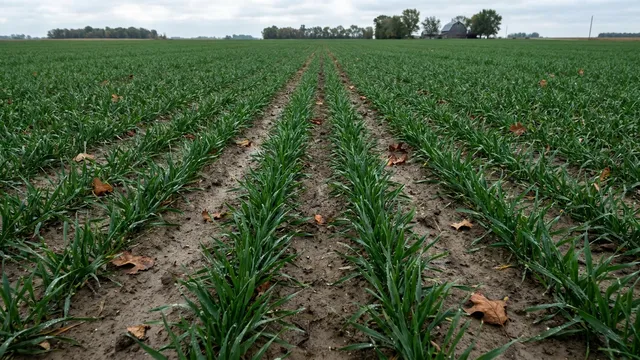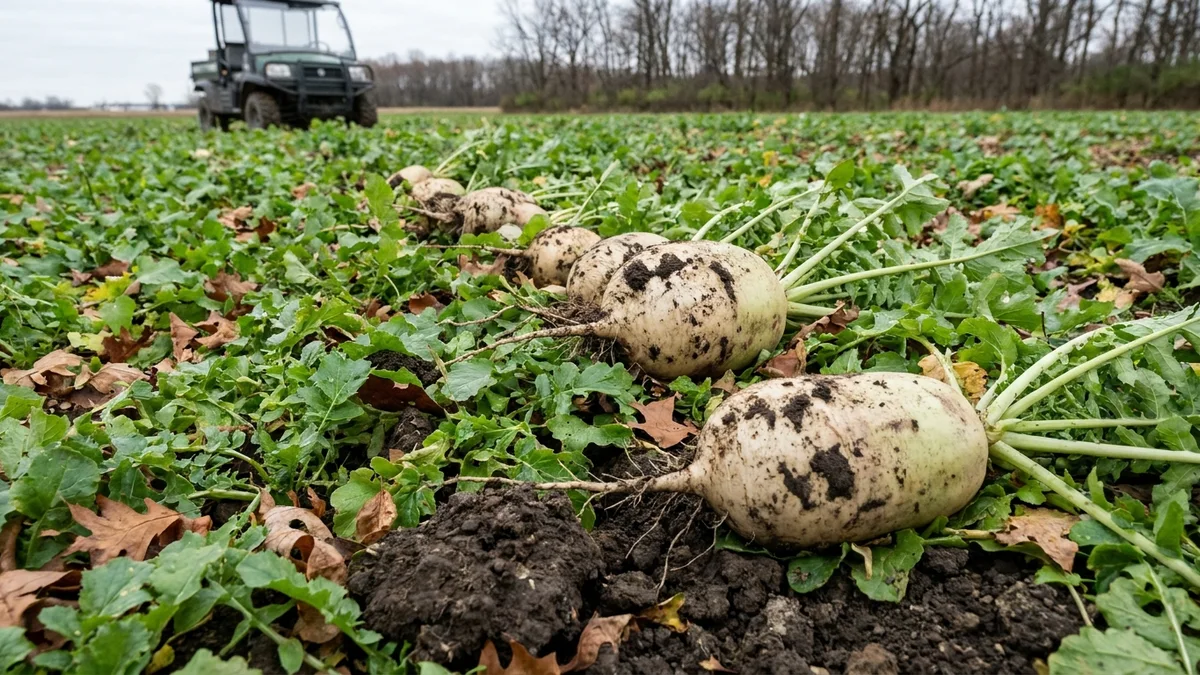
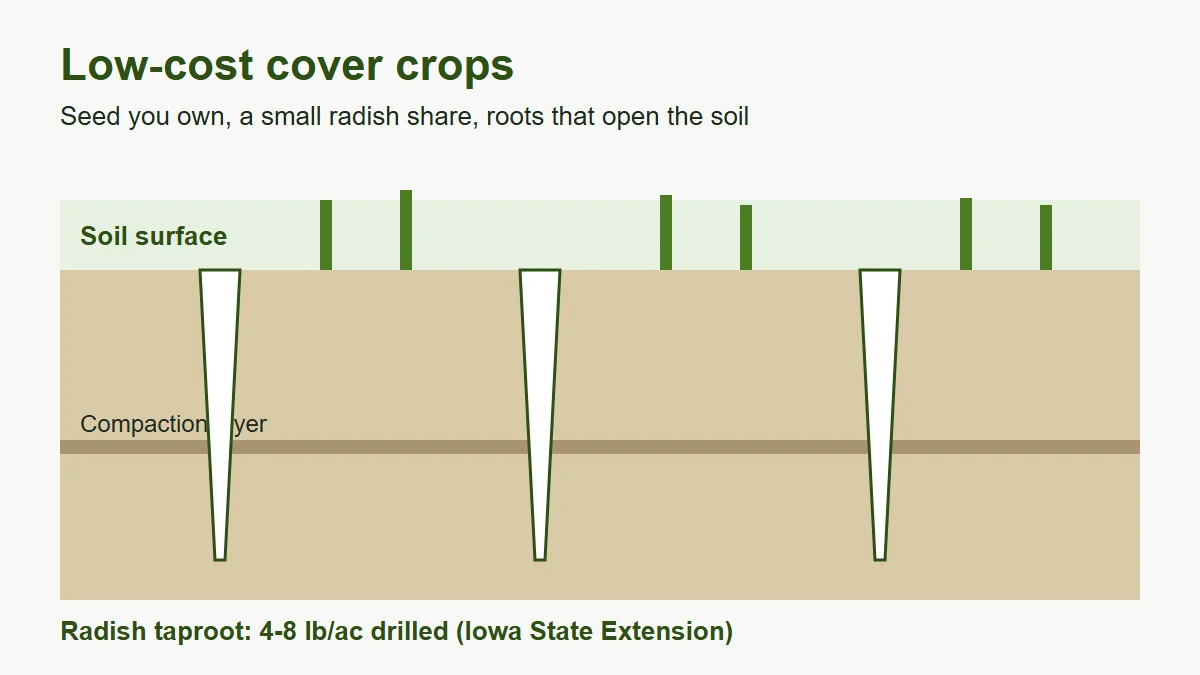
You can run a low-cost cover crop with seed you already own, a short spring cover, or a fall blend that carries a small amount of tillage radish. For radish, Iowa State Extension lists 4-8 lb/acre drilled and 5-10 lb/acre overseeded for a stand of its own, and mixes use less.
What is the cheapest way to start a cover crop?
Use leftovers. During the December 2022 Coffee Shop call on the lessons of that season, growers described emptying the bin of old oats, wheat, screenings and soybeans, mixing it all together and seeding it as the cover crop. One grower put it this way: a cover crop is a plant you can control easily and terminate when you choose.
Old seed is a good fit because a blend does not depend on one species. If some seed is weak, the rest of the mix fills in. Seed a little heavier when you are not sure about germination, and you have turned stale inventory into living roots.
- Small grains: oats, wheat, rye or barley, cheap and fast.
- Legumes: peas, old soybeans or clover for diversity.
- Screenings: cracked corn and soybeans from cleaning the bin.
- A little radish: a few pounds in the blend adds a taproot.
Does a short spring cover crop still pay off?
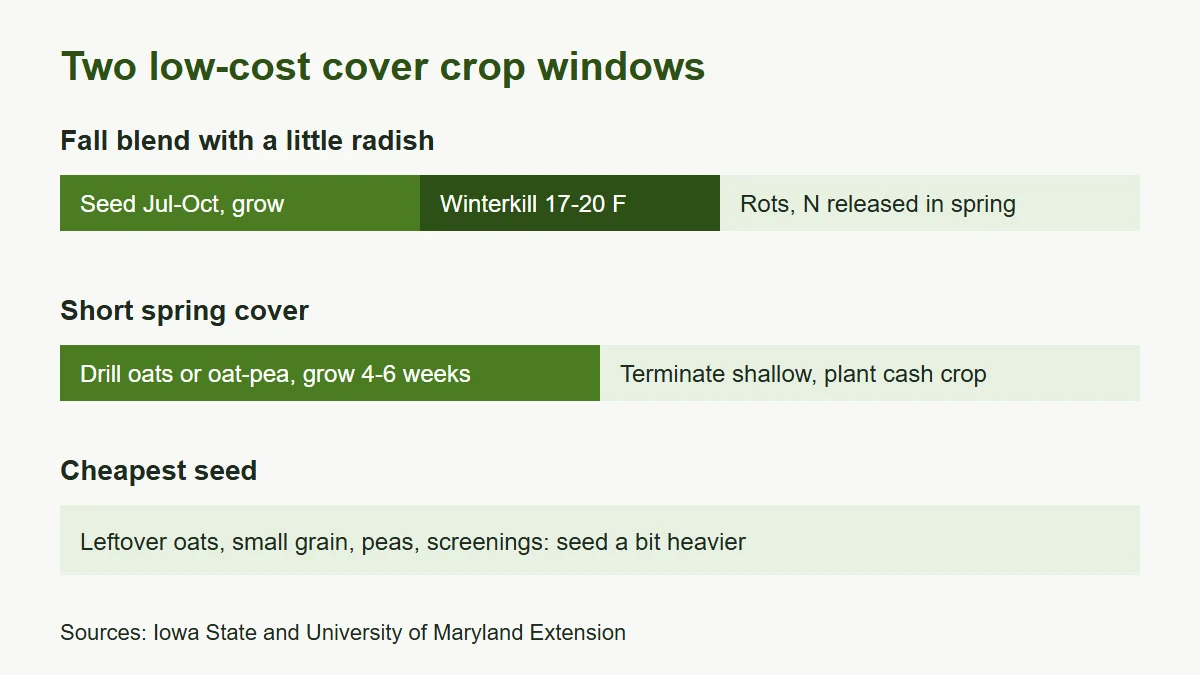
It does the job it was seeded for. If you missed the fall window, drill oats or an oat-pea mix in early spring and let it grow for roughly four to six weeks before you plant. The living roots feed soil microbes, so the biology is already running when the cash crop goes in, instead of waiting for that crop to start it.
Growers in the session also pointed out that oats are cheap and grow fast in cool soil, so you can seed them as soon as the drill can run. Terminate with light, shallow tillage or mowing ahead of planting, and keep the cover small enough that your equipment handles it. In one example a grower worked the ground about an inch deep and planted into that soil.
Moisture matters. Plan around the weather where you farm, and pick the termination method that fits your ground.
How much tillage radish should you seed?
| Source | Seeding rate | Notes |
|---|---|---|
| Iowa State Extension | 4-8 lb/acre drilled, 5-10 lb/acre overseeded | Seed July through October |
| University of Maryland Extension | 6 lb/acre drilled; trials used 8-9 lb/acre | Early seeding gives more growth before winter |
| Multi-species blend (grower practice) | A small share of the above, a few lb or less | The seed is tiny, so a little goes a long way |
The seed is so small that it spreads far at low rates. Growers in the session described seeding a few pounds or less per acre inside a blend, and that works as a starting point for a mix. If radish is the main species, use the extension numbers above. Either way, seed early enough to get leaf and root growth before the first hard freeze.
What does tillage radish do in spring?
It scavenges nitrogen in fall and gives it back as it rots. University of Maryland Extension says an early-seeded forage radish that closes its canopy by early October will typically hold 150 lb N/acre or more before it winterkills, and it recorded 35 lb/acre more nitrate-N in the top 12 inches in April in Maryland. That is one location, so treat it as an example of what the crop can do.
The same extension source says forage radish winterkills at 17-20 F. In our session, growers noted that well-grown plants were gone by spring. Seed in time for a good stand and the radish rots down on its own in early spring.
The root does a second job. Iowa State Extension rates radish as having high potential to alleviate soil compaction. One grower in the session described wet, mucky spots that held water; after a summer cover blend they drove across the same areas the next spring without sinking in. The roots opened channels and took up excess moisture. That fits our field notes: radish roots reach past a compaction layer and leave channels for water and the roots that follow.
In the same video, the group also noted that a cover crop acts as mulch, and a good cover leaves soil in better condition for the next crop.
How does a cover crop work with a biological program?
Roots put sugars into the soil and fish feeds the same community from another direction. TNT HEF 2-0-0 is made from naturally fermented whole saltwater salmon in a cold process, and it gives soil microbes fats, amino acids and volatile fatty acids to work with. Applied in-furrow at 2-4 qt/acre on the crop that follows, it puts that food next to the seed. HEF 2-0-0 is OMRI Listed for Canada (COR); US certified-organic acres should use HEF 2-3-0 or Super Salmon+, both OMRI Listed for NOP.
TNT has 20+ years of experience with growers who pair covers and biology. Our field notes list the usual timeline: better emergence and plant color in year one, structure improving and residue breaking down faster in year two, and clear differences in drought resistance by year three and beyond. That timeline varies with soil, weather and program.
What does a cover crop cost compared with what it gives back?
The cost is mostly seed and a drill pass. When the seed is leftover grain, the seed cost is close to nothing and the pass is the main expense. In return you get living roots through more of the year, a root system that opens heavy ground, and a mulch layer on the surface. Start on one field or one block, so you learn how your soil, your drill and your calendar fit together before you scale up. Keep notes on seeding date, species and rate, then compare the block with the rest of the farm the next spring.
How do you set up a low-cost cover crop plan?
- Pick the window. Fall after harvest, summer after wheat, or a short spring cover before planting.
- Take inventory. Gather leftover oats, small grain, peas and screenings.
- Add a little radish. A few pounds in the blend, or extension rates if radish is the main crop.
- Seed early. Drill or broadcast and let it grow while soil is warm.
- Terminate and plant. Cold ends the radish; mow or work spring covers shallowly.
- Leave a check strip. Compare emergence and soil condition with a side with no cover.
Our corn guide shows where in-furrow HEF fits after a cover crop. To try it on the field coming out of a cover, request a free sample or call (574) 532-6201.