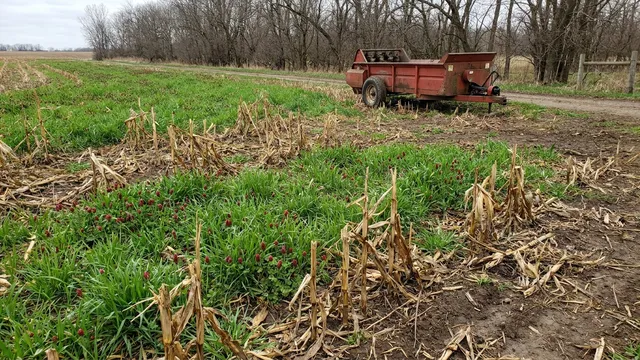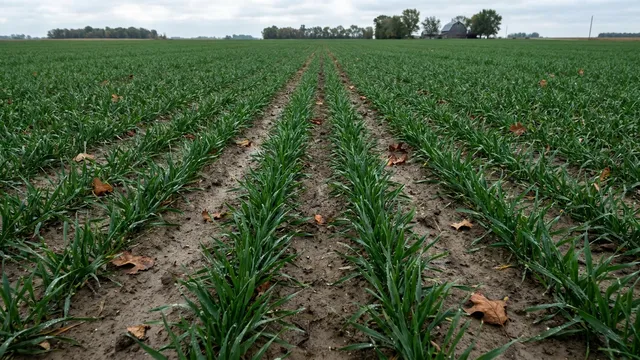
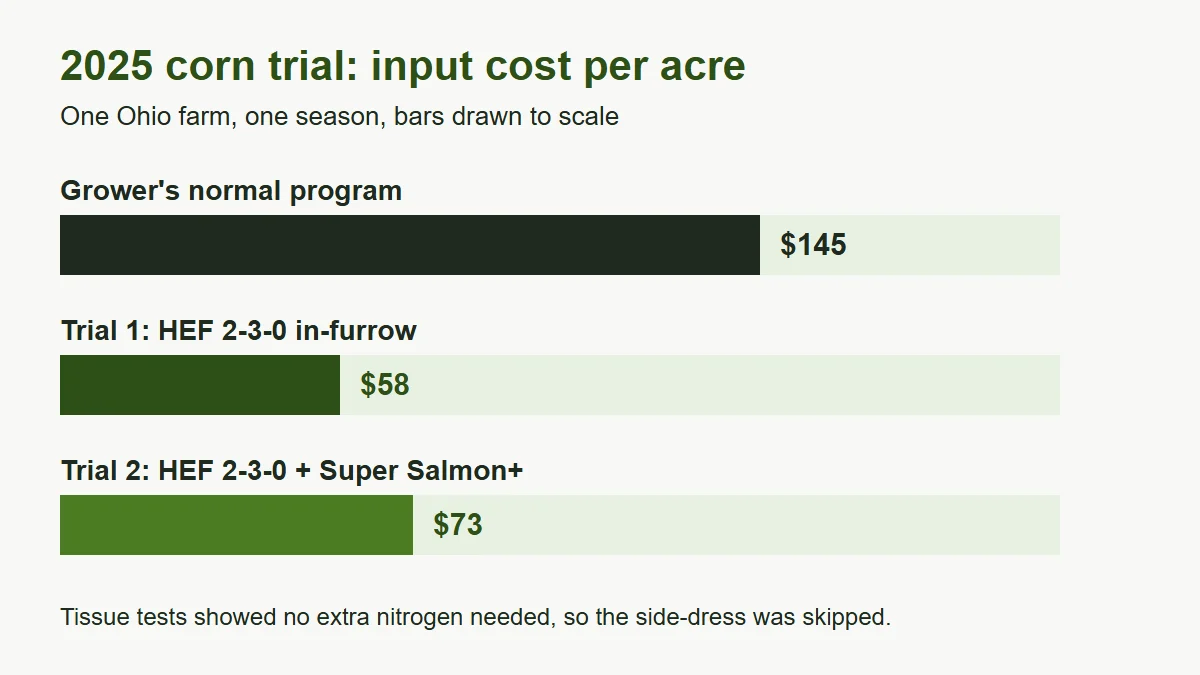
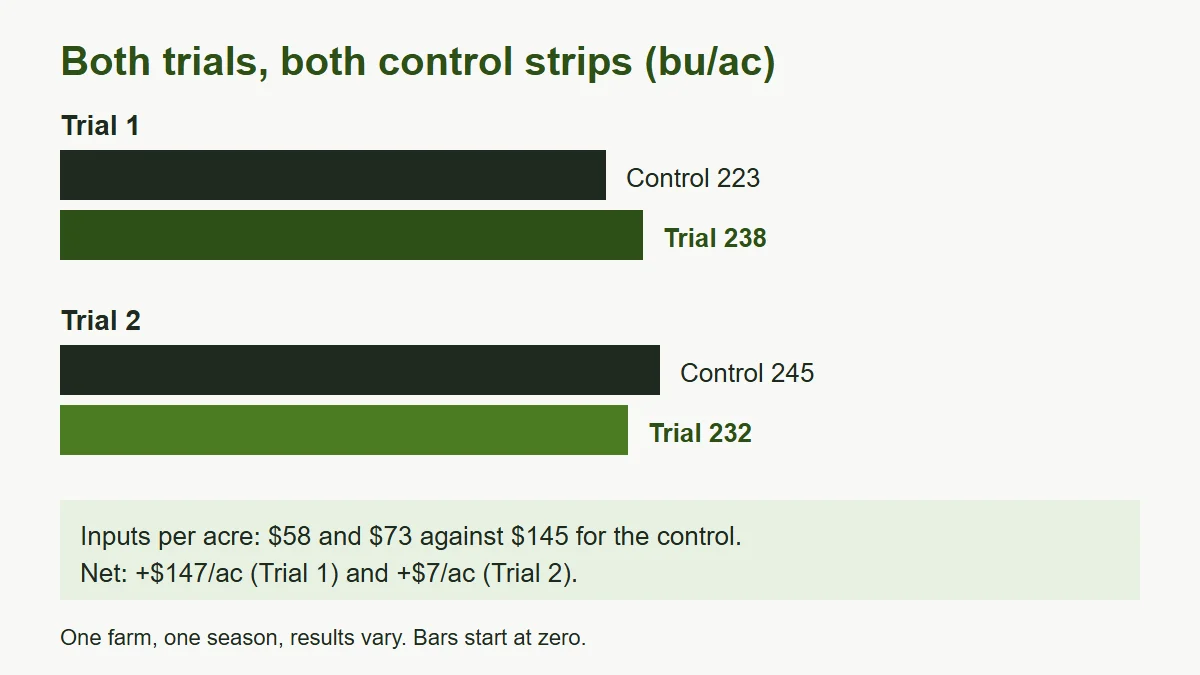
On one Ohio farm in 2025, tissue tests showed corn had enough nitrogen after TNT HEF 2-3-0 went in-furrow at 2 qt/ac, so the grower skipped a 60 gal/ac 28% side-dress. Trial 1 yielded 238 bu/ac against a 223 bu/ac control with inputs at $58 against $145 per acre, and Trial 2 yielded 232 bu/ac against a 245 bu/ac control with inputs at $73 (one farm, one season, results vary).
What was the trial compared against?
We did not compare against bare ground. The control was what the grower really does. In our TNT Talk Time session, TNT 2025 Trial Results, we walked through the program line by line. RhizeBio, an independent soil microbiome lab, analyzed soil, rhizosphere and plant tissue through the season.
The field ran from sand to clay and had some drought, so the strips sat in different soils. That is normal on a working farm, and it is why we always say one farm, one season.
What did each program include?
| Input | Control (farm program) | Trial 1 | Trial 2 |
|---|---|---|---|
| 8-24-0 starter | 5 gal | 3 gal | 3 gal |
| HEF 2-3-0 in-furrow | None | 2 qt/ac | 2 qt/ac |
| 28% in the 2x2 | 10 gal | 10 gal | None |
| Super Salmon+ in-furrow | None | None | 2 gal/ac |
| 28% side-dress (V4-V5) | 60 gal | Skipped | Skipped |
| Fungicide pass (VT) | Yes | Not in the program | Not in the program |
| HES foliar (VT timing) | None | 1 gal/ac | 1 gal/ac |
TNT products are fertilizers and biostimulants, not fungicides. The fungicide pass was left out of the trial programs as a design choice, and the foliar HES was a trial fact, not a disease claim.
Why did the side-dress get skipped?
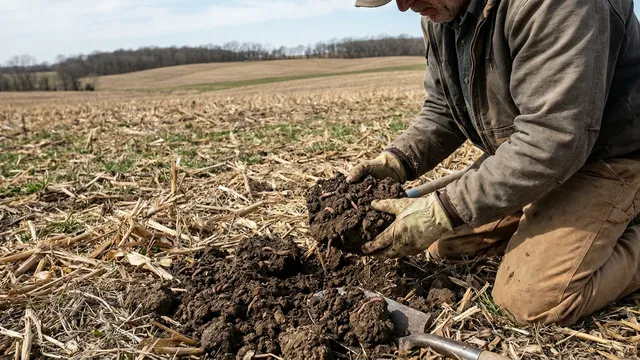
A tissue test told us. Samples taken during the season showed the corn had enough nitrogen in both trials, so the 60 gal/ac side-dress was not applied. That one decision is where most of the input savings came from.
The lesson is the method: let a tissue test make the nitrogen call instead of the calendar. If you want to read the numbers on your own ground, see our guide on soil tests versus tissue tests.
What were the yields and costs in both trials?
| Result | Trial 1 (HEF 2-3-0) | Trial 2 (HEF 2-3-0 + Super Salmon+) |
|---|---|---|
| Trial yield | 238 bu/ac | 232 bu/ac |
| Control strip yield | 223 bu/ac | 245 bu/ac |
| Inputs, trial vs control | $58 vs $145 | $73 vs $145 |
| Net vs control | +$147/ac | +$7/ac |
One farm, one season, results vary. Each trial has its own control strip, so read each pair on its own.
How was the money worked out?
We kept the math plain and on the cautious side. A yield gain was credited at a modest price per bushel, and a shortfall was charged at a higher one, so the numbers lean conservative. Input prices were mostly Canadian prices converted, so your own prices will change the answer.
- Trial 1: 238 bu/ac beside a 223 bu/ac control strip, with $58 per acre in inputs against $145. Net: +$147/ac.
- Trial 2: 232 bu/ac beside a 245 bu/ac control strip, with the yield difference charged at the higher rate. Inputs were $73 against $145, and the program still netted +$7/ac.
The point of Trial 2 is what it shows about input cost. With no 28% in the band and no side-dress, the program still came out ahead on the grower math, with 2 gal/ac TNT Super Salmon+ in the trench. The tissue tests are what confirmed the crop had sufficient nitrogen.
Why do the two trials differ?
Two things differ. Trial 2 took out the 28% in the 2x2 band and used Super Salmon+ instead, and the two trial strips and their control strips sat in different soils. The field ran from sand to clay, with some drought, and the Trial 2 control strip yielded 245 bu/ac, higher than the Trial 1 control at 223. That spread is the reason we publish both pairs side by side, each with its own control (one farm, one season, results vary).
It is also the reason a strip trial beats a single field-to-field comparison. If the treated and untreated strips share the same soil, the same hybrid and the same planting date, the gap you measure belongs to the program and not to the ground.
What did the soil and tissue show?
RhizeBio's soil analysis in both corn trials found more microbial diversity in the treated strips, and the soil lab reads that as a soil-biology observation, not a promise. Tissue nitrogen in the treated strips held about 10% above the control through V5 and 14% at V8 (RhizeBio soil analysis, 2025, one farm).
One pattern is worth knowing before you pull your own samples. Soil sulfur, manganese and copper tested lower around the roots while the plant tissue tested higher. RhizeBio's reading is that the crop was pulling the nutrient as fast as it was made available. That is why we say to read soil and tissue results together.
What does this trial show a corn grower?
- Input savings are on the table. Across both trials the programs cost $58 and $73 per acre in inputs against $145 for the grower's normal program.
- Tissue testing gives you a nitrogen decision. Both trials used in-season tissue results to decide that the side-dress was not needed, which is a method any grower can copy.
- A small in-furrow rate can anchor the program. 2 qt/ac of TNT HEF 2-3-0 sits inside the 2-4 qt/ac in-furrow range on the label, with the starter cut from 5 gal to 3 gal.
- Independent lab data sits behind it. RhizeBio sampled soil, rhizosphere and tissue at several growth stages, so the story is more than yield at the scale.
The goal is for growers to see the data and make their own call, which is also how we suggest you run your own strips.
How do you try this on your own farm?
- Pick one field and one question, such as "can a tissue test tell me whether this side-dress is needed?"
- Lay out a treated strip and an untreated strip side by side, with the same hybrid and planting date.
- Put TNT HEF 2-3-0 in-furrow at 2-4 qt/ac on the treated strip.
- Tissue sample both strips during the season and let the result decide the nitrogen pass.
- Harvest both strips the same way and write down yield and input cost for each.
Full trial notes are on our reports page, and the corn guide shows HEF by growth stage. You can ask for a sample at /free-sample or call (574) 532-6201. With 20+ years of experience behind the TNT team, our advice is the same every time: measure it on your own ground.