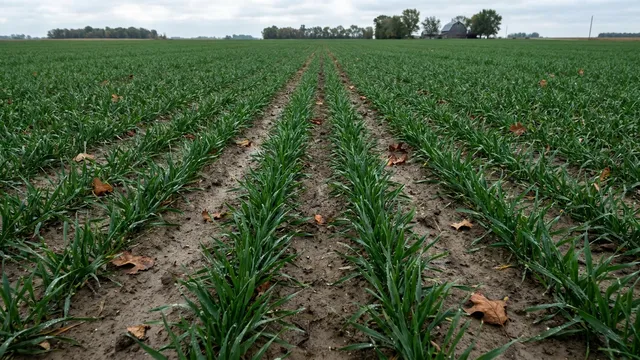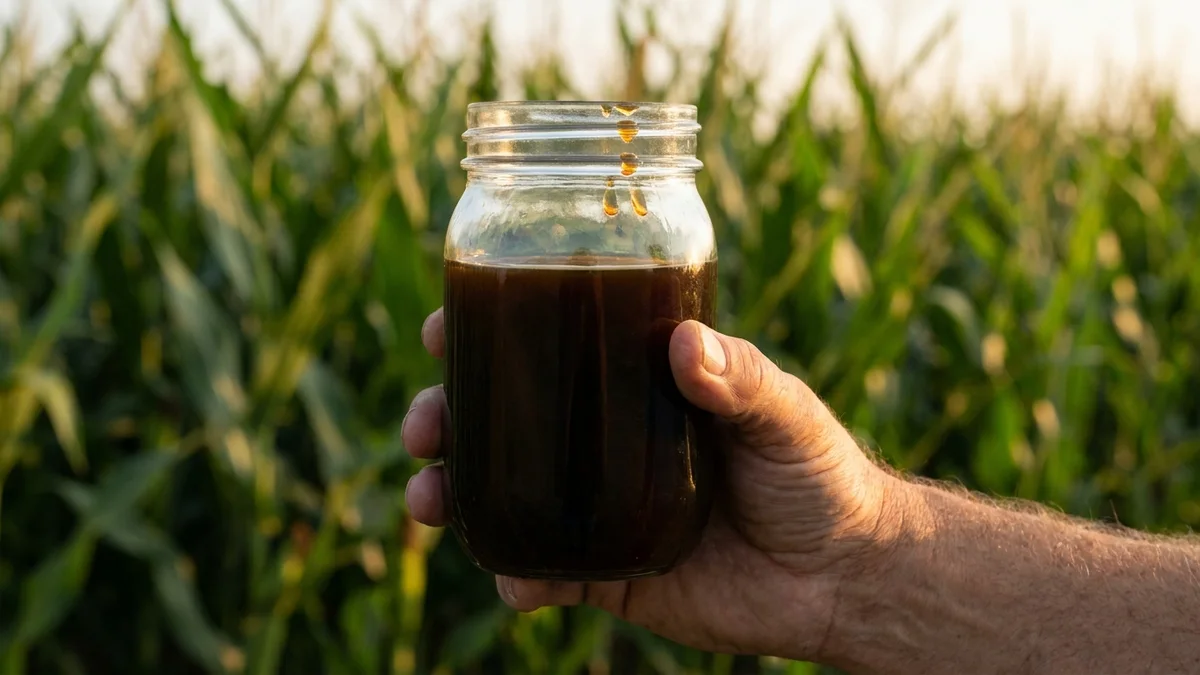
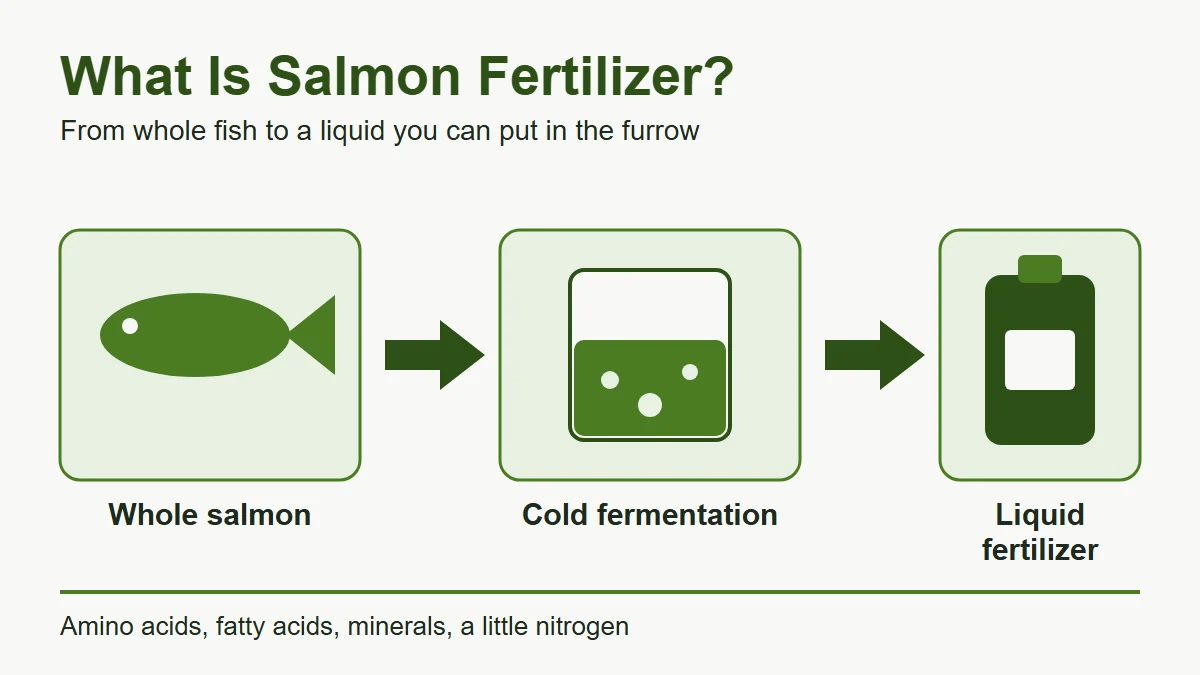
Salmon fertilizer is a liquid made from salmon that has been broken down so soil life and plants can use what is in it: amino acids, fatty acids, minerals and a little nitrogen. How the fish is broken down, by fermentation, enzymes, acid or cooking, is what separates one fish product from another.
How is salmon fertilizer made?
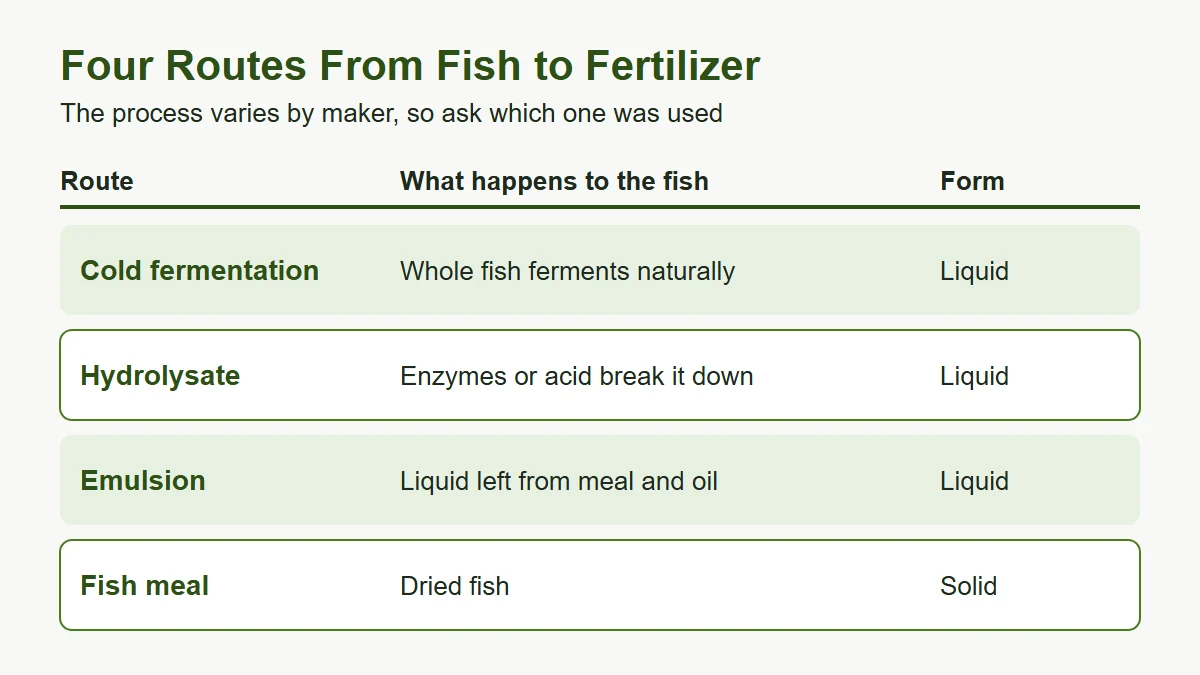
There is no single recipe, and the label on the jug rarely says which one was used. Liquid fish products fall into four groups.
- Cold fermentation. Whole fish is left to ferment with natural organisms. This is how TNT makes HEF: naturally fermented whole saltwater salmon from British Columbia waters, cold process.
- Hydrolysate. Fish protein is broken down with enzymes or acid until it liquefies. A 2013 University of Maryland thesis by Armin Norouzi describes one method that used an acidic system to hydrolyze fish protein, then separated the liquid from the solids.
- Emulsion. A by-product of making fish meal and fish oil, according to University of Illinois Extension. It is the liquid that remains, screened and stabilized before it is bottled.
- Fish meal. Dried fish sold as a solid, not a sprayable liquid.
What is in salmon fertilizer?
Salmon is mostly protein, fat and water. Break it down and you get small pieces that plants and microbes can take up. TNT lab and label data show what that looks like in a finished product.
- Nitrogen and phosphate. Modest. TNT HEF 2-0-0 tested 2.49% total nitrogen (Midwest Laboratories, October 2025). HEF 2-3-0 tested 2.17% nitrogen and 3.48% phosphate (Midwest Laboratories, March 2024).
- Volatile fatty acids. HEF 2-0-0 reported 71.01% total acids on a dry-matter basis (Dairy One), so over 70% volatile fatty acids. These and amino acids are easy for microbes to use.
- Water. HEF 2-0-0 is 87.30% moisture as received. You are buying a concentrated liquid, not a heavy nutrient load.
- Trace minerals. Small amounts of potassium, sulfur, calcium and sodium, depending on the product.
For comparison, the University of Illinois Extension says a typical fish emulsion may be about 2-4-1. Whatever the type, nobody buys fish fertilizer for the nitrogen alone. It is a biological input, not a replacement for a bulk nitrogen program.
Why does the N-P-K change from one fish fertilizer to the next?
Because of what is added to the fish. In our Talk Time session What’s Up With Fish? we explained that liquid fish on its own lands at roughly 2-0-0. Higher numbers on the label usually point to something added:
- Higher phosphate: usually phosphoric acid, added to stabilize the liquid. That is how TNT HEF 2-3-0 gets its 3% available phosphate.
- Higher potash: usually added potash, as muriate or sulfate.
- Extra sulfur: sulfate of potash, or sulfuric acid used as the stabilizer.
- Dry fish meal: much higher numbers because the water is gone, and more phosphorus because the bones are in it. Liquid products leave the bones behind.
So a 2-0-0 is not a weak product. TNT HEF 2-0-0 is straight naturally fermented whole saltwater salmon, and its value is in the amino acids and volatile fatty acids the N-P-K numbers do not count.
What does it do in the field?
It feeds soil biology and gives young plants amino acids and fatty acids to work with. TNT describes HEF as a biostimulant for fungi and bacteria that supports root development and faster crop establishment. Those describe how the product works, not a promise of yield.
For measured results, TNT points to its 2025 strip trials on one Ohio corn farm, with both trials shown side by side: the full write-up is on the reports page. One farm, one season, results vary with soil, weather and program.
How do farms apply salmon fertilizer?
| Method | HEF label rate | Notes |
|---|---|---|
| In-furrow (30 inch rows) | 2-4 qt/acre | HEF 2-3-0 label: 1:10 or more dilution at planting |
| Broadcast on soil | 2-4 qt/acre | At least 10 gal water/acre |
| Foliar | 0.5-4 qt/acre | At least 10 gal water/acre; 15 gal is standard on most crops |
| Transplant or root dip | 1:500 dilution | Dip the roots |
| Fertigation | 1:5000 dilution | Every watering |
TNT Super Salmon+ has its own label: up to 2 gal/acre in the trench or broadcast at a minimum 1:3 dilution, and up to 2 gal/acre foliar or by fertigation at a minimum 1:10. Once diluted it is highly active, so use it within 4 hours.
The label rates above are the starting point. The rate calculator turns them into gallons for your acres.
What should I check on a fish fertilizer label?
- The process. Ask whether it is fermented, hydrolyzed, emulsion or meal. Makers differ.
- Guaranteed analysis and lab report. Read these, not the front of the jug. A 2-0-0 and a 2-3-0 are different products for different jobs.
- OMRI status and standard. If you farm organic, confirm the listing yourself at omri.org and with your certifier. For US organic (NOP), TNT HEF 2-3-0 (tna-16447) and TNT Super Salmon+ (tna-17020) are OMRI Listed. TNT HEF 2-0-0 is OMRI Listed for Canada (COR) only. All three listings expire 1 March 2027.
- Filtration. On the sprayer, TNT advises 50 mesh or coarser for its fish products and steers growers away from 180 mesh. Super Salmon+ is screened to 120 mesh at the plant; match your own strainers to your equipment.
- Package. Gallon and 2.5 gallon jugs, and 275 gallon totes for HEF and Super Salmon+.
Which TNT salmon products fit which job?
- TNT HEF 2-0-0 is the general soil-health and calcium-blend product.
- TNT HEF 2-3-0 adds phosphorus for starters and cool soils.
- TNT Super Salmon+ (2-2-0) takes a share of that fermented salmon and fortifies it with kelp and chitin.
When in the season does it go on?
The TNT HEF crop chart ties timing to growth stage. On corn it goes with the seed, in-furrow at 2 qt/acre in 20-30 inch rows or 4 qt/acre in 8-20 inch rows, with foliar passes at V3-V4, V9 and early silking. Beans get it with the seed and foliar at V3, R2 and R7. Oats and barley go with the seed and again at Feekes 3-4 (Feekes 3-5 for barley) and flag leaf. Hay and alfalfa get a soil pass at the break of dormancy and a foliar pass after each cut once regrowth is 4-6 inches.
Foliar on the chart is 1 pt/acre in 15 gallons of water. That is the bottom of the 0.5-4 qt/acre label range, so start where the crop chart says and adjust with a strip trial.
Is it hazardous to handle?
The safety data sheet does not classify it as hazardous under OSHA 29 CFR 1910.1200. It is an opaque dark brown liquid, non-flammable and completely water-soluble. TNT products are derived from natural sources with no harmful synthetic chemicals and are safe for livestock. Still wear normal gloves and eye protection when you handle any concentrate.
How do you store it, and what about the smell?
HEF is freeze-thaw stable, so it performs well even after freezing. Store it cool and out of direct sunlight, and vent the container above 40°F. For Super Salmon+, a room-temperature spot gives the longest shelf life.
The smell is a mild marine odor straight from the jug, because it is fermented salmon, not rotted fish. Diluted in the spray tank it is faint, and it fades within hours once it is on soil or leaf. Early morning or evening application helps near homes.
Mixing and sprayer tips
- Jar test any new mix before you fill the tank.
- Keep constant agitation, with a return line to the tank, so the biological product does not settle.
- Use the same water source as the field.
- HEF can be tank-mixed with most herbicides, fungicides, insecticides and liquid fertilizers. With a herbicide, it works as the water conditioner.
How can I check it on my own fields?
Run a strip trial: one question, treated and untreated strips side by side, harvested in the same direction. TNT will send a free sample for a strip trial on your own ground.