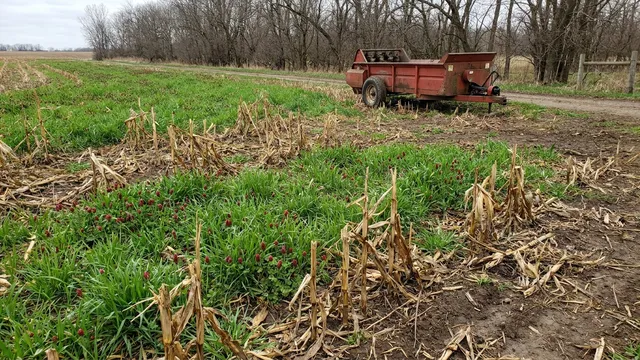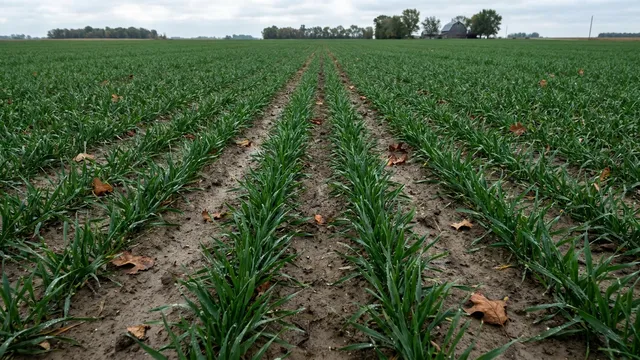
Mycorrhizae work by brokering phosphorus: the fungus reaches minerals the root cannot, and the plant pays with sugar. On high-phosphorus ground the plant is already being fed, so the fungi do less, which is why matching the program to the soil is how you get them working.
What do mycorrhizae actually do in a field?
Arbuscular mycorrhizal fungi grow into the root and send fine threads out through the soil. Those threads reach phosphorus, calcium, zinc and water that sit beyond the root hairs, and they hand it over to the plant. In return the plant sends sugar made in the leaves.
In our Coffee Shop session, Lessons from 2022, Part 1, the group described it as a nutrient broker. The fungi also link up with nitrogen-fixing bacteria and legume nodules, swapping sugar for nitrogen, and they move water through the soil toward the plant. That is why a working network shows up as better drought resistance later in the season.
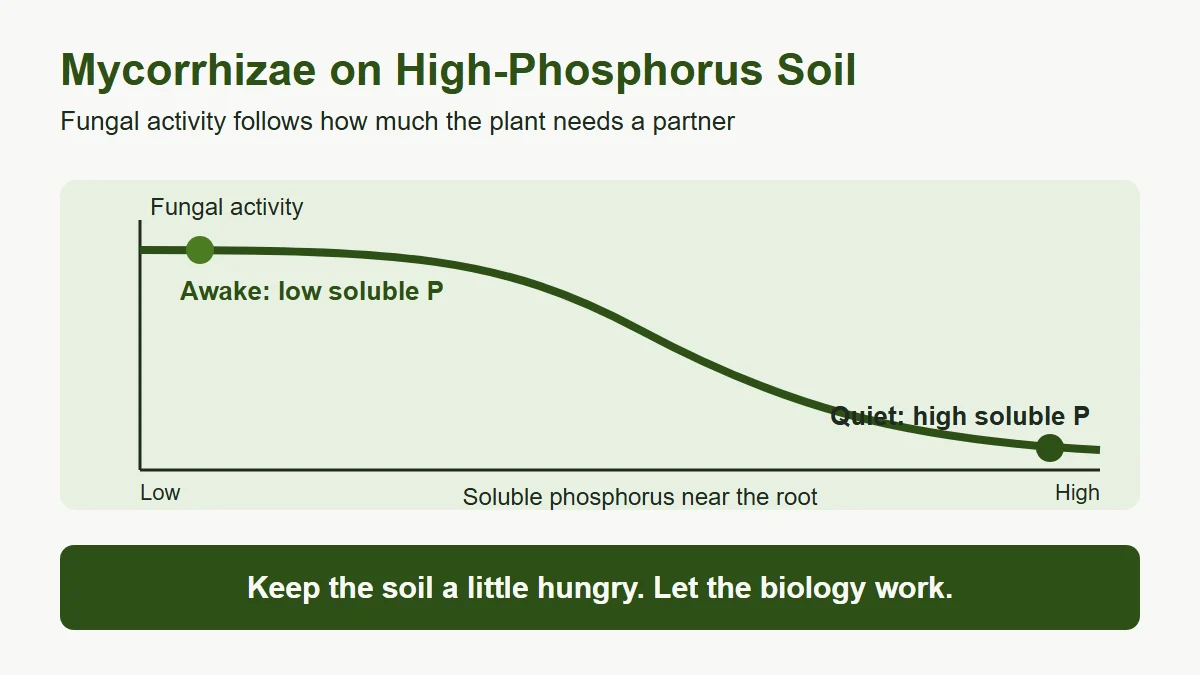
Why do the fungi stay quiet when phosphorus is high?
Natural systems regulate themselves. If the plant can get the phosphorus it needs from the soil solution, it has no reason to feed a fungal partner. The fungi read that and hold back.
Research agrees. A 2016 paper in Scientific Reports (Liu and colleagues) on maize in an intensively managed calcareous soil reported that "high P-supply reduced root colonization while optimum-P tended to increase colonization." The same logic applies to nitrogen. When soil nitrogen is plentiful, the nitrogen-broker job is not needed either.
For a grower this is good news in one way: the fungi are not broken, they are waiting for a reason to work. Moderate inputs give them that reason.
Where does the phosphorus go after you apply it?
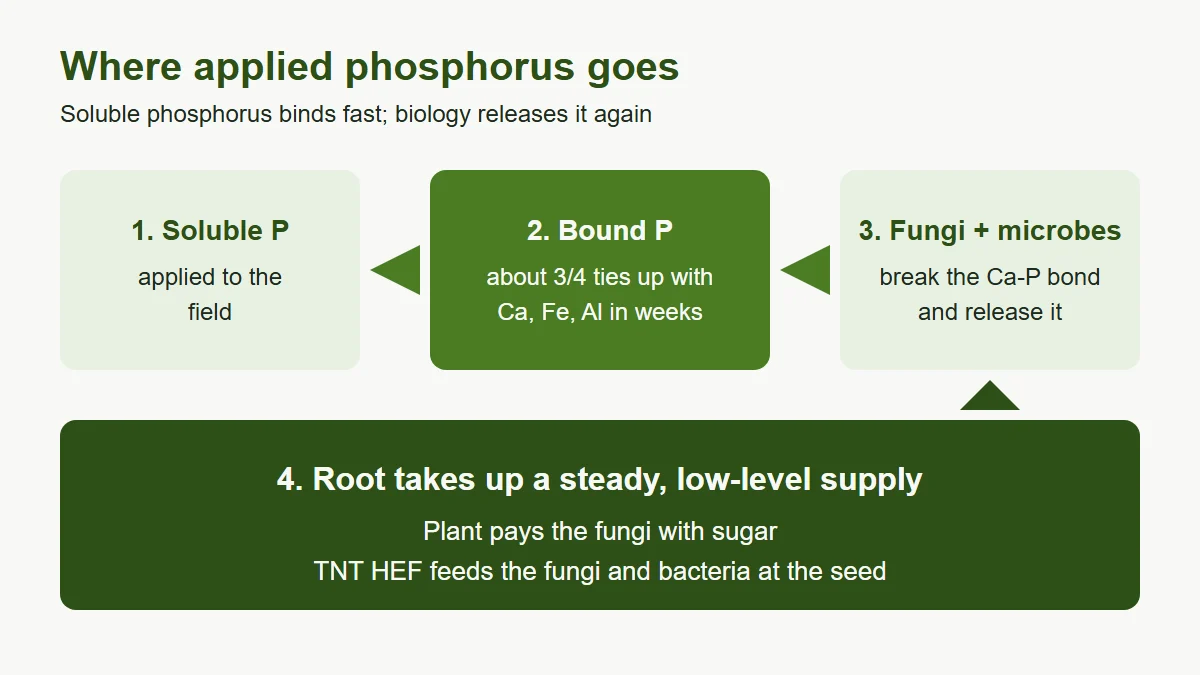
Soluble phosphorus is also very reactive. It likes to bind with calcium, iron and aluminum. In TNT’s soil-biology notes and in the grower session, about three quarters of applied soluble phosphorus is tied up within a few weeks. The same reaction pulls calcium out of reach, so you can lose both at once.
That is the reason a soil test can say "high" while the plant looks short. Total phosphorus is not the same as phosphorus the root can use. A soil biology test with H3A phosphorus and H3A calcium reads closer to what the plant can take up, and in our sessions we saw low H3A numbers on fields that looked full on paper.
Fungi and the microbes around them break the calcium-phosphorus bond and release minerals while keeping them apart, so they do not re-bind inside the fungal network. The soil biology provides a steady, low-level supply, like a slow drip instead of one big meal. TNT’s notes include a 10-year example in which soil phosphorus rose from 22 to 29 ppm with no phosphate applied, the biology doing the work. Every field is different, so use your own soil tests to track it.
What helps mycorrhizae do their job?
| Field condition | What the fungi do | What helps |
|---|---|---|
| Very high soluble phosphorus (for example heavy MAP) | Rest; the plant is not asking for help | Check H3A phosphorus, moderate the soluble phosphorus, give the biology a reason to work |
| Excess nitrogen | Less nitrogen-for-sugar trading | Keep nitrogen moderate and match it to tissue tests |
| High salt or conductivity in the tank | Can be inhibited | Use enough water as carrier |
| Deep tillage | Network cut off from its food | Place an inoculant near the seed |
| Low H3A phosphorus or calcium | Ready to work | Feed the biology; add available calcium in the row |
| Residue and cover crops present | Fed all year by living roots | Keep roots growing as long as you can |
What does that mean for an inoculant?
An inoculant puts selected fungi right where the seedling will root. It is most useful where phosphorus is low or the network has been disturbed, and especially after tillage. When tillage chops the plant off from the fungal threads, the fungus tries to find a new host, and the longer that takes, the more it uses itself up. A corn plant, and even more a soybean plant, can take a while to reach any remaining network below the tilled layer. Putting an inoculant in the seed trench shortens that distance.
Two practical checks apply. First, keep the tank salt solution modest with enough water as carrier. Second, if you plan to pair an inoculant with heavy soluble phosphorus, expect the fungi to wait.
How does TNT HEF fit in?
HEF is naturally fermented whole saltwater salmon, made in a cold process, with over 70% volatile fatty acids. It is a potent biostimulant for fungi and bacteria and draws beneficial microbes from the surrounding soil to the seed trench. In our grower sessions we describe it as colostrum for the seedling: you set up the beneficial relationships before the seed has even emerged.
TNT HEF 2-0-0 suits general soil-health programs and calcium blends where phosphorus is not limiting. For a starter that also adds phosphorus in cool soil, TNT HEF 2-3-0 (3% available phosphate) is the choice, and it is OMRI Listed for US organic (NOP, tna-16447, expires 1 March 2027). The in-furrow rate is 2-4 qt/acre, with 2 qt on 20-30 inch rows and 4 qt on narrower rows. For Canadian organic growers, HEF 2-0-0 carries its OMRI listing under COR only.
The idea behind it all is to keep the soil a little hungry, give the microbes a push, and let them do the work, instead of supplying 100% of everything. For measured TNT numbers, see the 2025 corn trial (one farm, one season, results vary) on our reports page.
How do you set this up on your farm?
- Read the soil test. Ask for H3A phosphorus and calcium if your lab offers them, and look at residue, drainage and smell as well.
- Pick one field. Keep the phosphorus plan moderate and write down what you apply.
- Feed the biology at planting. Use HEF in-furrow at label rate, and an inoculant near the seed if you have tilled.
- Keep roots growing. Cover crops and living roots feed the network between cash crops.
- Leave a check strip. Harvest both the same way and compare.
Want to try HEF on one field? Ask for a free sample or call (574) 532-6201, and our team with 20+ years of experience will help you set up the strip.