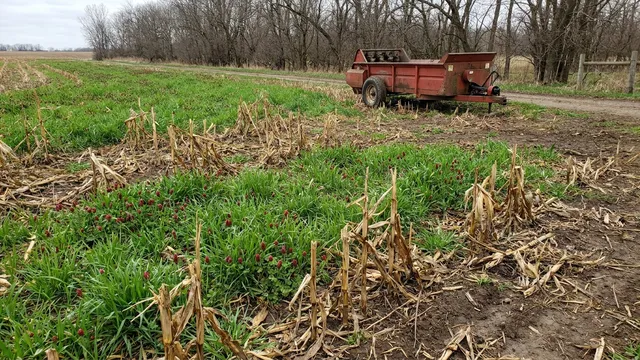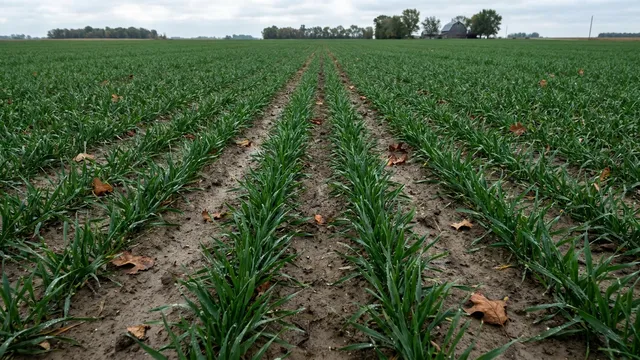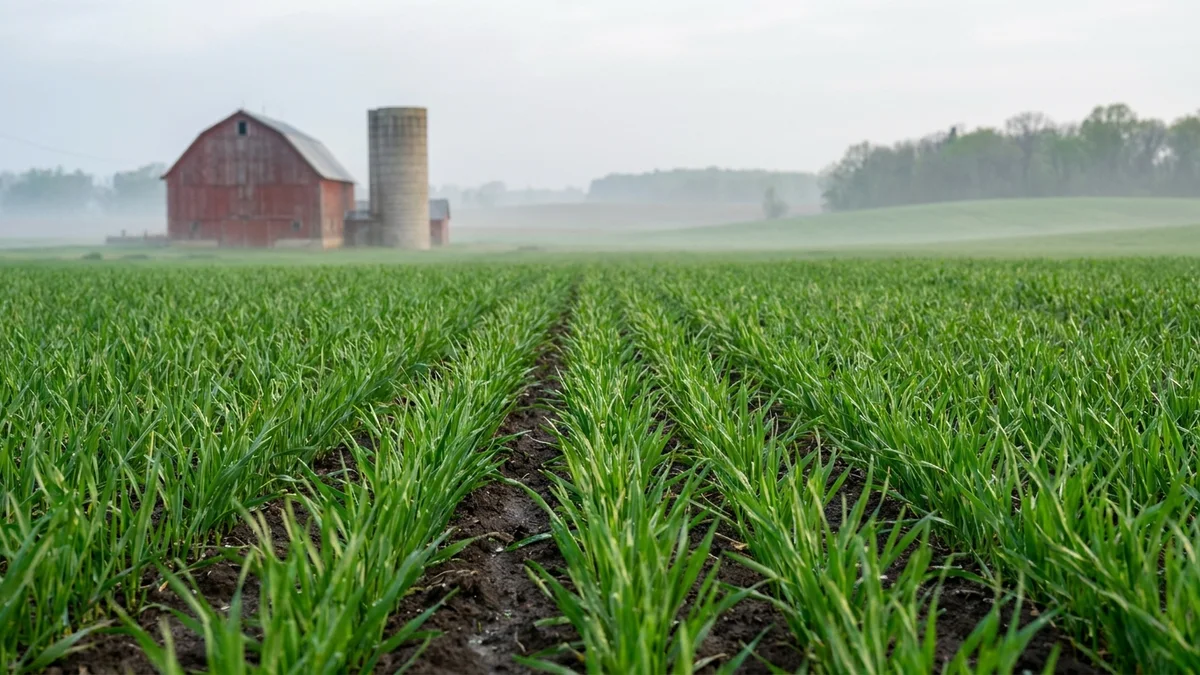
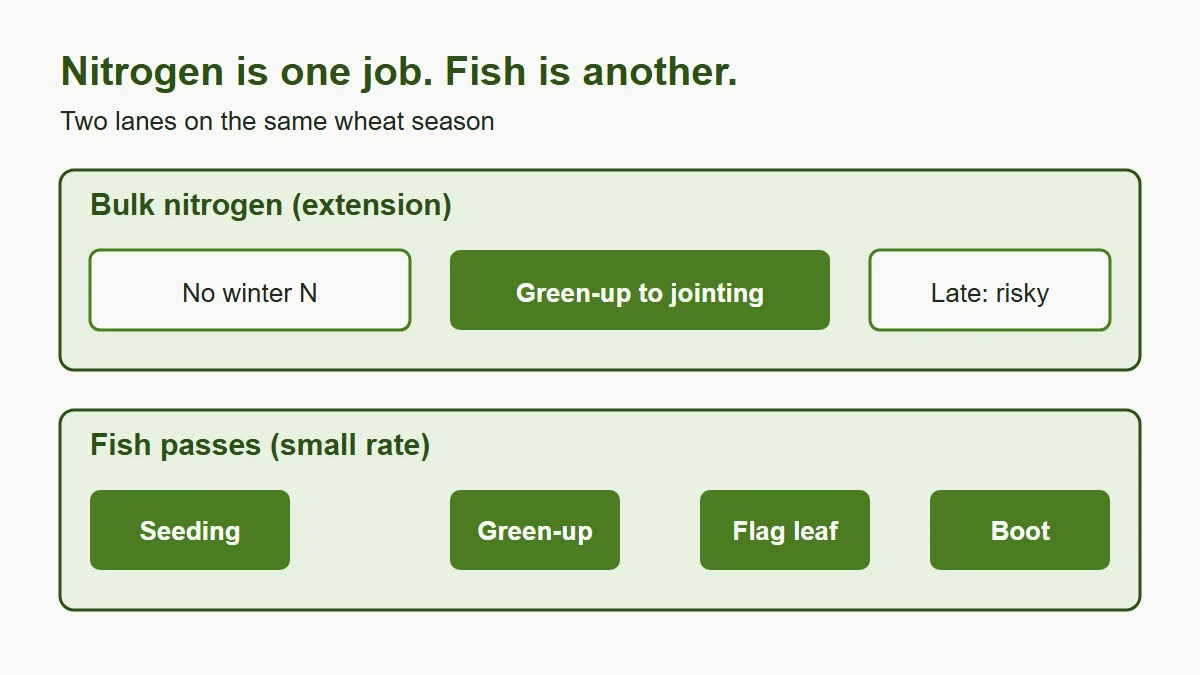
Fish fertilizer can fit in a wheat program, but only as a small-rate biological pass, not as your nitrogen. Put your bulk nitrogen on at green-up like extension tells you, and use TNT HEF at 1 to 2 quarts per acre in-furrow at seeding, at green-up and at flag leaf, with TNT HES added at boot.
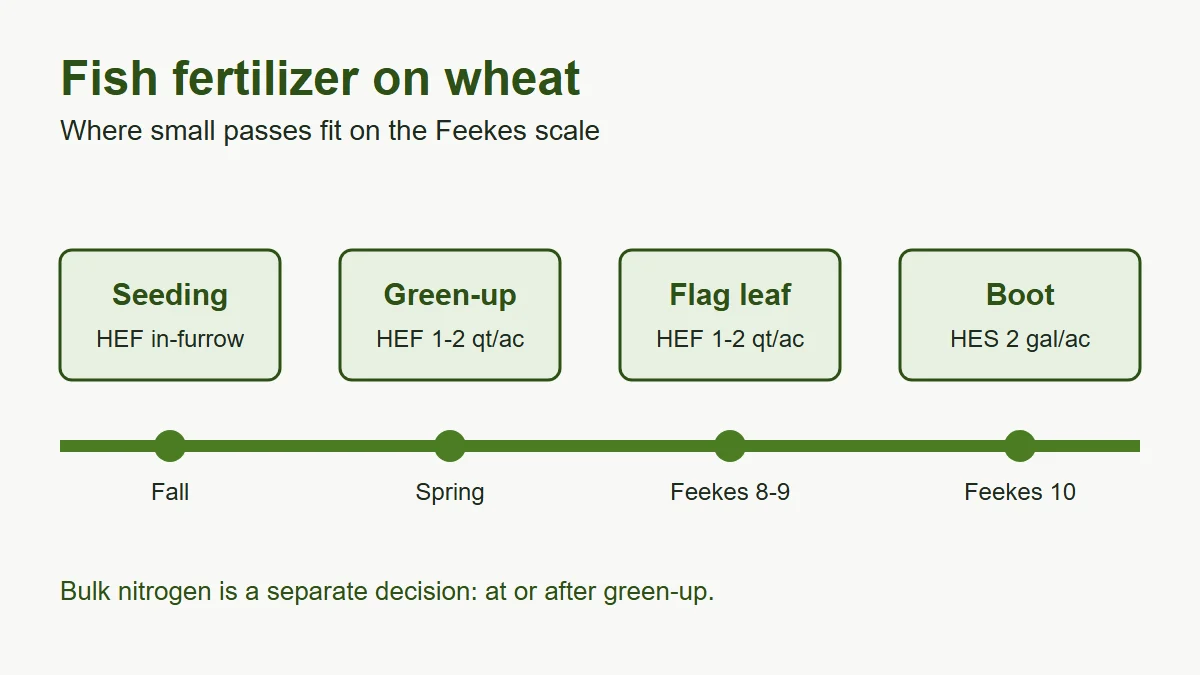
That is the short answer. The rest of this post lays out a wheat season by Feekes stage so you can see what each pass is for and what it is not for. If you have not used the Feekes scale in a while, it is just a numbered ladder: stage 3 is tillering, 6 is first node, 9 is the flag leaf out, 10 is boot, 10.5 is heading.
What does wheat actually need, and when?
Wheat needs most of its nitrogen in spring, from jointing on. Ohio State Extension (the C.O.R.N. newsletter, 2021) says wheat does not require large amounts of nitrogen until stem elongation or jointing, Feekes 6, which is generally the middle or end of April depending on location and spring temperature, and that the wheat "does not need most of the N until April and May anyway."
The same Ohio State piece says to wait until green-up before applying nitrogen. Green-up is not a stage on the scale. It is when new growth covers the winter-damaged leaf tissue and the field turns solid green. Ohio State says its research has shown no yield benefit from nitrogen applied before that point.
Waiting too long has a cost too. University of Wisconsin Extension (Integrated Pest and Crop Management) reports research sites from 2014 to 2016 where nitrogen at green-up out-yielded nitrogen at Zadoks 30, about Feekes 5.5, by more than 5 bushels at half the sites, with a 6 bushel average advantage. Ohio State notes that holding nitrogen until flag leaf emergence (Feekes 9) may cut yield.
So the nitrogen window is green-up to early stem elongation. That is the job of your nitrogen source, not your fish.
Where does fish fertilizer fit in that calendar?
It fits around the nitrogen, at four points. TNT’s wheat program lists the passes below. All rates are from TNT’s own program notes.
| Feekes stage | Season point | Nitrogen (extension) | TNT pass |
|---|---|---|---|
| Seeding | Fall planting | Starter only if your plan calls for it | HEF 2-0-0 or 2-3-0, 1–2 qt/ac in-furrow |
| Green-up (not a Feekes stage) | Spring | Bulk N goes on from here (Ohio State, Wisconsin) | HEF, 1–2 qt/ac, foliar or liquid |
| 6 | First node | Peak uptake begins | No TNT pass listed |
| 8–9 | Flag leaf | Late N may cost yield (Ohio State) | HEF, 1–2 qt/ac, foliar |
| 10 | Boot | Not an N timing | HES, 2 gal/ac foliar, for grain fill |
What does an in-furrow pass at seeding do?
It puts a liquid biological right in the seed row. For wheat, TNT lists TNT HEF 2-0-0 or HEF 2-3-0 at 1 to 2 quarts per acre in-furrow or as a foliar application. That is a smaller rate than the 2 to 4 quarts used for corn in-furrow. If you already run liquid through a drill, the setup is the same as on other crops: clean strainers, a jar test, and a steady flow at drill speed.
One honest note: a quart or two of a 2% nitrogen product delivers well under a pound of N per acre. It will not feed the crop. It is there for what naturally fermented whole saltwater salmon brings to the soil and leaf, which is a different job than a nitrogen source does.
What about the spring green-up pass?
This is the same moment your nitrogen goes on, so it is the easiest one to add. TNT lists HEF 2-0-0 or 2-3-0 at 1 to 2 quarts per acre, foliar or liquid, at spring green-up. TNT lists HEF as compatible with most liquid fertilizers, 28% included, so it can ride along with a liquid nitrogen pass. Jar-test any new combination in your own water first.
Which nitrogen source you use is a separate decision. Ohio State points out that 28% UAN carries the greatest loss potential and ammonium sulfate the least, and that urease inhibitors can help with urea when conditions favor volatilization. That is a nitrogen conversation, and a good one to have with your agronomist.
Is the flag leaf pass worth a trip?
That depends on your program, but it is the cheapest pass to add if you are already in the field. TNT lists HEF 2-0-0 or 2-3-0 at 1 to 2 quarts per acre as a foliar application at flag leaf. Flag leaf is the leaf that feeds the head, which is why growers watch it closely. If you are already running a fungicide or herbicide pass, TNT products can generally go in the same tank, with a jar test first.
Do not read this as a disease or yield promise. It is not one. It is a foliar nutrition and biological pass, and whether it pays on your ground is something you can find out with a strip.
What is HES for at boot stage?
At boot, TNT suggests adding TNT HES at 2 gallons per acre as a foliar application for grain fill support. HES (1-0-0) is a blend built on Hi-Energy Fish with other natural sources. It is not OMRI Listed, so it is not one of the options for certified organic wheat. See the TNT HES page for the label.
What if my wheat is certified organic?
Then your product choice narrows to two. TNT HEF 2-3-0 (tna-16447) and TNT Super Salmon+ (tna-17020) hold OMRI listings under the USDA National Organic Program. HEF 2-0-0's listing covers Canada (COR), not the US, and HES, Activator and Trash Buster are not OMRI Listed. All of these listings are dated to expire March 1, 2027. Put the certificate in your organic system plan and confirm with your certifier before the first pass. The full checked list is in our OMRI Listed post.
Because HEF 2-3-0 is the product listed for NOP and also on the wheat program, it is the one to pick for in-furrow and the spring and flag leaf passes. Details are on the HEF 2-3-0 page. Your nitrogen on organic wheat comes from somewhere else, such as manure, compost or a legume in the rotation.
How can I test it on my own wheat?
Run a strip. Leave one untreated pass in the field with the same variety, seeding date and nitrogen, and harvest both the same direction with the same combine. Weigh and correct for moisture. One farm, one season is thin evidence, and results vary with soil, weather and variety. Our own corn data is posted with the same caveats on the reports page, and we do not have wheat trial numbers to quote.
You can see crop-by-crop rates on the wheat crop page.
The short version
- Nitrogen: wait for green-up, put it on by early stem elongation, and do not rely on fish for it.
- Fish passes: seeding in-furrow, green-up, flag leaf, 1 to 2 qt/ac of HEF.
- Boot: HES at 2 gal/ac; not OMRI Listed, so not for certified organic.
- Certified organic: pick from HEF 2-3-0 and Super Salmon+, cleared with your certifier first.
- Test it against an untreated strip before you scale it.
Sources named above: Ohio State University Extension, “Is it too early to apply nitrogen to wheat? Yes” (C.O.R.N. Newsletter, 2021); University of Wisconsin Integrated Pest and Crop Management, “Tips for Nitrogen Management in Winter Wheat” (2017).